Month 2 to month 12 after ACL surgery: where ACL rehab in Seoul fits
ACL rehab in Seoul fits one stage of a longer recovery: bring your operation note and imaging, and a rehabilitation specialist at Kwangdong Hospital assesses your stage and sets a one-to-one plan.
The detail that most often decides whether a rehab trip to Seoul is worth taking has nothing to do with exercises. It is the folder you bring: the operation note, the imaging, and the protocol your surgeon gave you. So, can you do ACL rehab in Seoul if your knee was operated on somewhere else? Yes. At Kwangdong Hospital's Sports Medicine Center, a rehabilitation medicine specialist assesses which stage of recovery you are in from those records, then sets a one-to-one plan with exercise and physical therapists.
A week in Seoul fits one stage of a recovery that usually runs for months. It does not replace the rest.
If you live in Singapore, Hong Kong or Tokyo, tore a ligament skiing or playing five-a-side, and have a limited number of leave days, this page maps the months after an ACL injury onto the days you can actually spend here.
Your records decide the plan more than your flight dates do
A rehabilitation plan starts from where your knee is now, and the fastest way to see that is on paper and on film. The center's own answer to "I had surgery elsewhere. Can I come just for rehabilitation?" is short: bring your surgical records and imaging, and a rehabilitation specialist will assess your recovery stage and set up a plan.
That matters for a traveler because the first visit cannot be spent reconstructing your history. Useful things to pack:
- the operation note (which graft, any meniscus work done at the same time)
- MRI images and reports from before and after surgery, on a disc or download link
- the rehab protocol from your surgeon or physiotherapist, with any restrictions on bending or loading
- a short list of what you can and cannot do today: stairs, running, squatting, pivoting
Without these, the assessment still happens, but more of your limited time goes to working out what was done to the knee.
How long does ACL rehab take after reconstruction?
Most people are cleared for full sport somewhere between 6 and 12 months after ACL reconstruction, according to the American Academy of Orthopaedic Surgeons. The clearance is based on criteria, not the calendar: pain and swelling settled, full range of motion, restored strength and restored balance.
The same AAOS article notes that physical therapy begins immediately after surgery, and that in the first 7 to 10 days the wound is kept clean and dry. Early work is about getting the knee fully straight again, switching the quadriceps back on, keeping the kneecap mobile and bringing swelling down. Strength and control come later, and sport-specific work comes last.
For a traveler, the practical reading is simple. Months of rehab cannot fit into one trip, so the question becomes which stage is worth a trip.
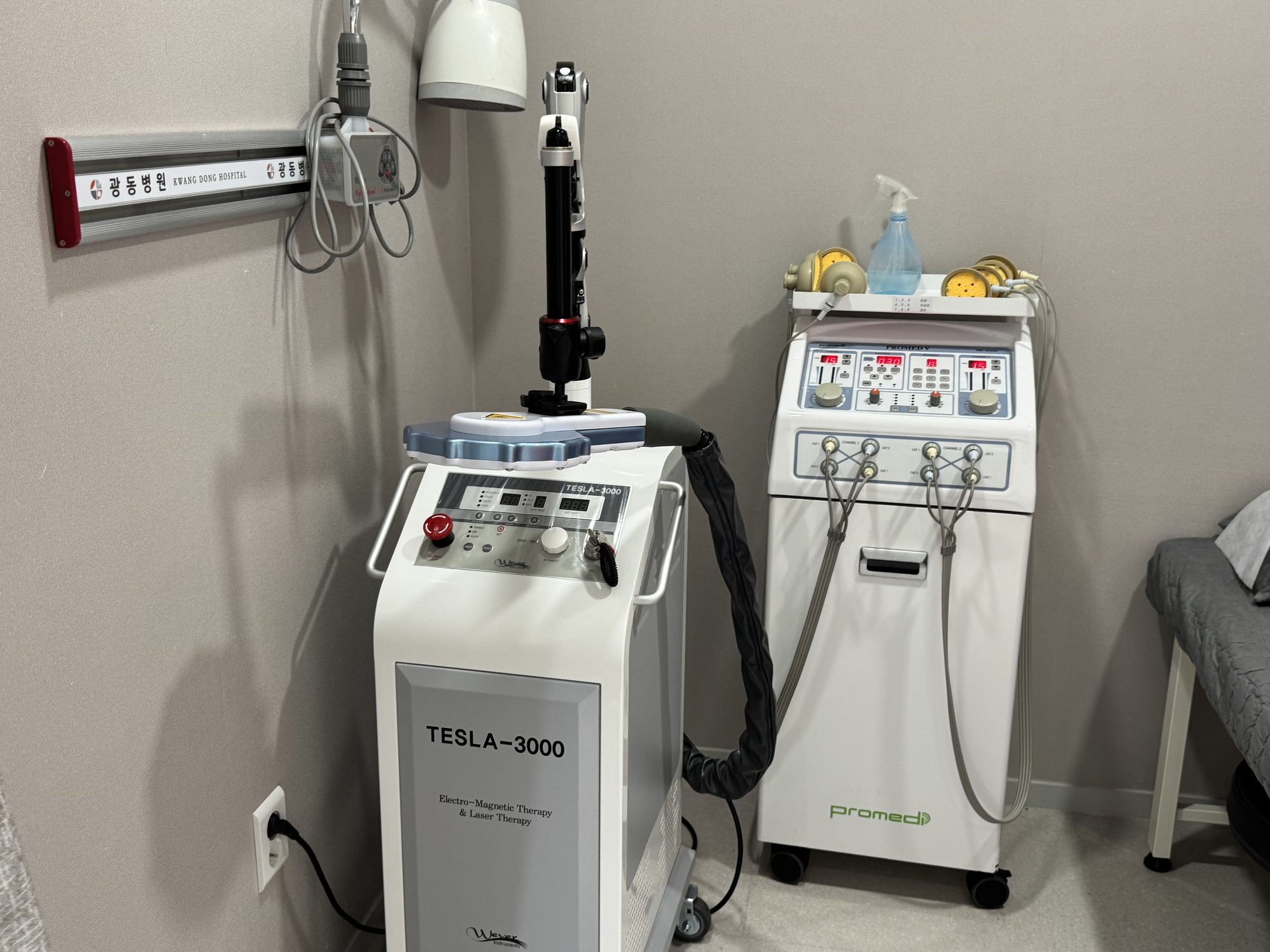
Which stage of recovery suits a week in Seoul?
The stages below are the broad phases described in general rehabilitation guidance. Your own surgeon's protocol sets the actual weeks, and it is the document to follow when the two differ.
| Stage | What is being worked on | Does a short trip make sense? |
|---|---|---|
| First days after surgery | Wound care, swelling, straightening the knee | Usually no. Stay near your surgeon, and see the travel note below. |
| Early rehab | Range of motion, quadriceps control, walking without a limp | Possible if your surgeon agrees, but the work is daily and repetitive, so home-based therapy carries most of it. |
| Strength and control | Single-leg strength, balance, left–right differences | A good fit. Measurements can show what has come back and what has not. |
| Return to running and sport | Jumping, cutting, sport-specific loading | A good fit, especially before a decision about returning to training. |
| After clearance | Preventing the next injury | Fits a short visit; movement analysis looks for imbalances before pain starts. |
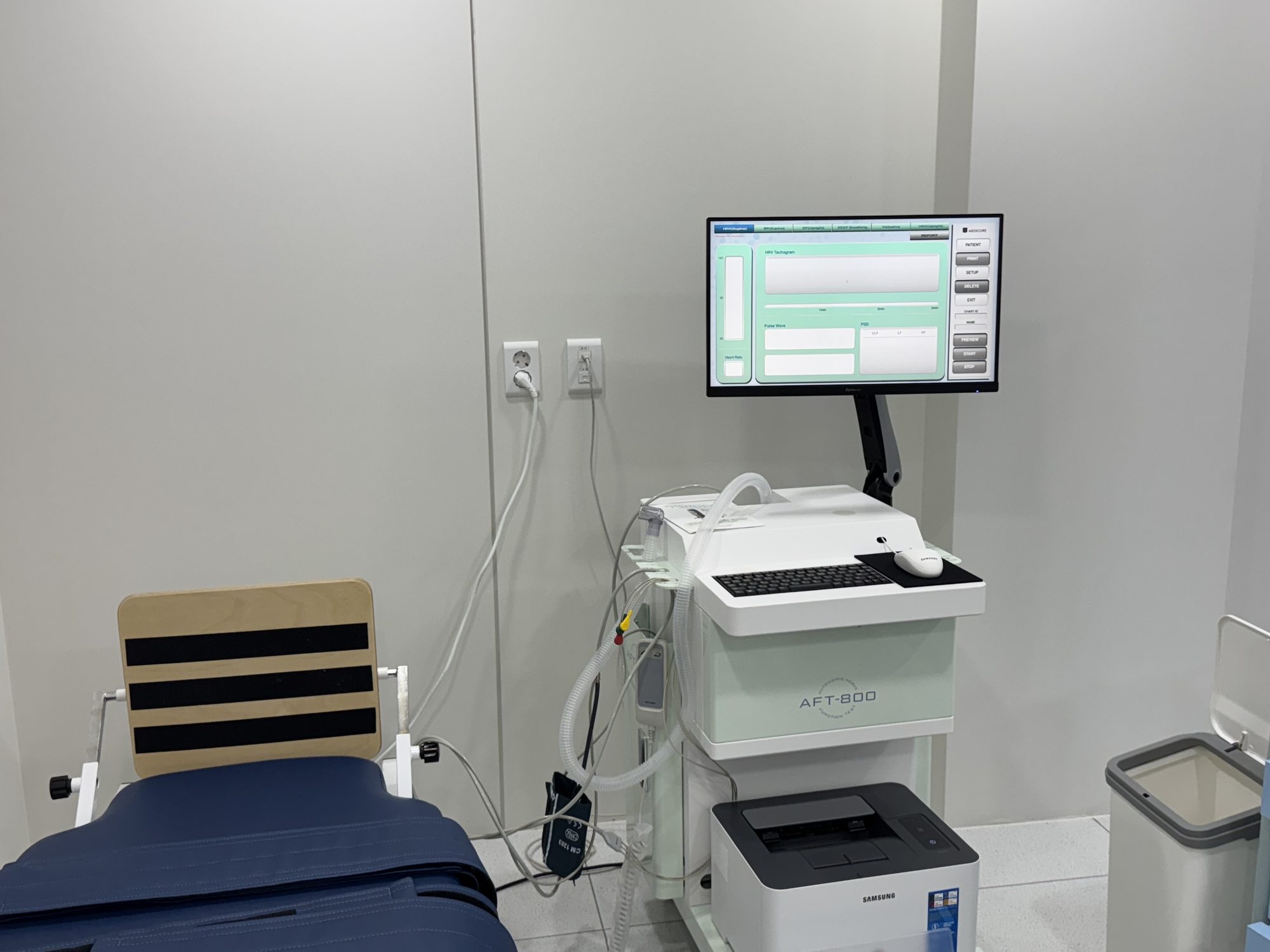
The two middle-to-late stages are where a short visit adds the most, because that is where measuring helps. The Sports Medicine Center lists these tests and compares results before and after surgery, and before and after rehabilitation, with the same instruments:
- Movement analysis (Exbody): automatic joint recognition checks imbalance, malalignment, posture from behind and the Q angle.
- Plantar pressure gait analysis: gait is measured with the N-step walk test (NSWT) and SPPB.
- Surface EMG (Exopill): electrodes on the skin record muscle activity during exercise, without needles.
- Isometric strength testing (VALD): weakness and left–right imbalance are measured and checked again after rehabilitation.
Not every test is done for everyone; the choice depends on your condition. If you have numbers from a test at home, bring them too, since a change over time tells more than a single reading.
Risks: who should not fly in for rehab yet?
Recent surgery is itself a travel risk, especially in the first 3 months.
The U.S. Centers for Disease Control and Prevention lists recent surgery or injury within the past 3 months among the risk factors for travel-related blood clots, and notes that anyone traveling more than 4 hours can be at risk. Its advice is to move your legs often on long trips, work your calf muscles, and talk to your doctor about prevention if you are at risk.
AAOS describes a blood clot in the veins of the calf or thigh after ACL reconstruction as rare but potentially life-threatening. Other problems it lists include knee stiffness or loss of motion in some patients, and chronic instability from a stretched or ruptured graft, which occurs in 5 to 10% of patients over the long term.
Postpone the trip and speak to your surgeon first if:
- you are within the first weeks after the operation and your surgeon has not cleared you to fly
- the leg has new swelling, warmth or pain that was not there before
- the wound is not fully healed
- the knee is giving way in daily walking; that needs a medical assessment, not a rehab holiday
Rehab carries its own risk. Loading a knee too early or too hard can set it back, which is why exercise intensity and range are adjusted to the diagnosis and recovery stage rather than to how many days you have in Seoul.
What happens at the first visit to the Sports Medicine Center?
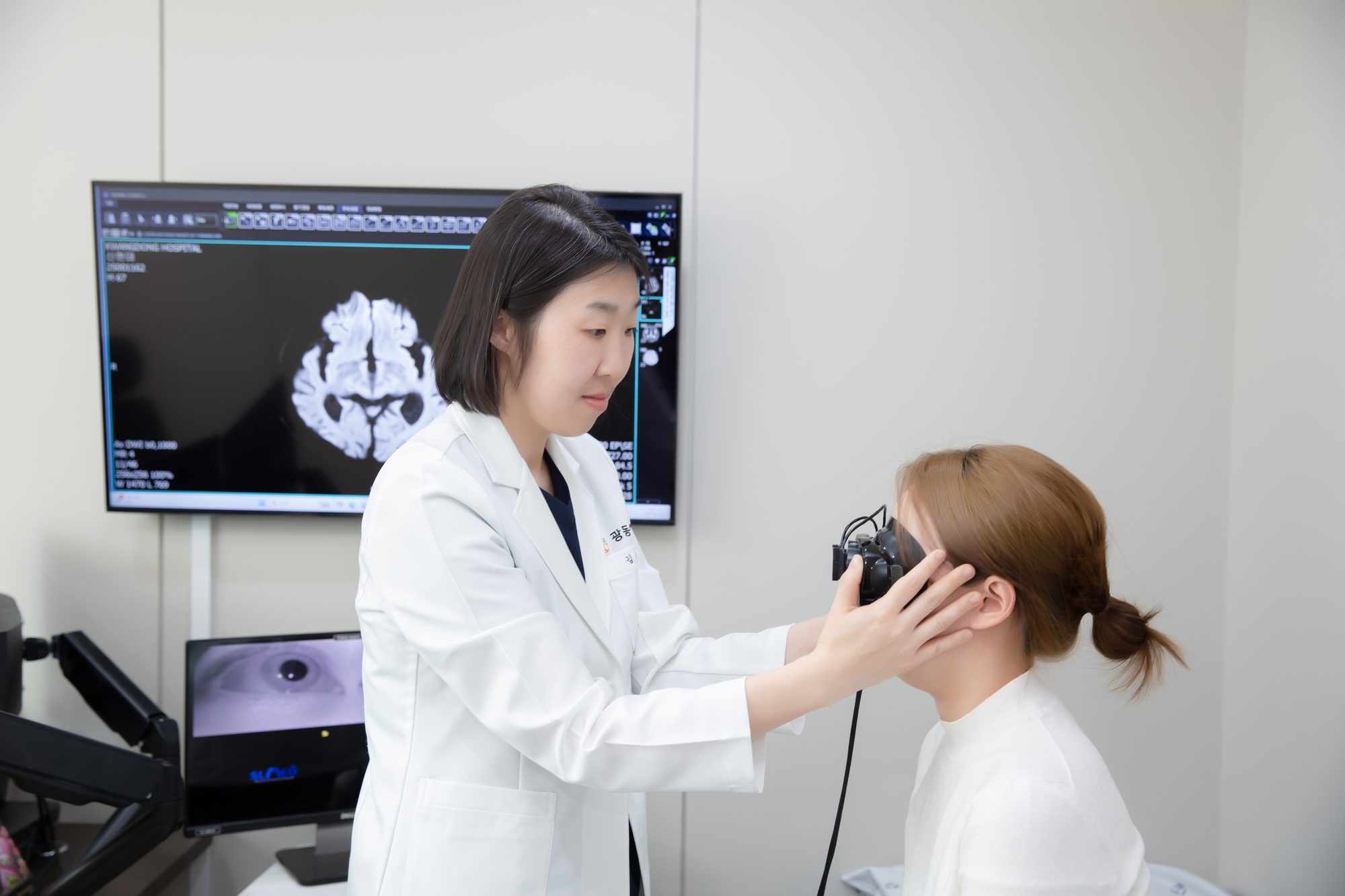
The first visit is a medical assessment by a rehabilitation medicine specialist, followed by the plan. The center is on the 5th floor, and exercise and physical therapy happen in the same space.
The center director is Dr. Sang-Hoon Shin, a rehabilitation medicine specialist and former clinical instructor in the Department of Rehabilitation Medicine at Gangnam Severance Hospital. His listed specialties include post-surgical rehabilitation, sports rehabilitation, musculoskeletal pain, and EMG and nerve conduction studies.
After the assessment, the work is one-to-one with exercise therapists and physical therapists. When the knee problem touches other areas, the center works with in-house orthopedics, neurology, internal medicine and Korean medicine.
The conditions the center lists include ACL tears, meniscus tears, ankle sprains, Achilles and patellar tendinitis, rotator cuff tears and hip impingement, so the same route applies if your injury is a shoulder or an ankle rather than a knee. The center also keeps a blog in Korean, including a piece on rehabilitation exercises for weeks 3 to 6 after ACL surgery. It is written for patients in Korea, but the exercise photos travel well.
Can you stay in the hospital for rehab instead of a hotel?
Sometimes. When needed, rehabilitation can continue as an inpatient on the 7th and 8th floor wards. Admission is decided after your visit, based on your condition, so it is not something to book from abroad in advance. Plan accommodation for the first night or two either way.
What if the assessment says the knee needs surgery?
You are referred to a partner tertiary hospital, because Kwangdong Hospital does not perform surgery.
If MRI, movement analysis and strength testing show that surgery is needed, the partner hospitals include Seoul National University Hospital, Samsung Medical Center, Asan, Gangnam Severance, Seoul St. Mary's or Myongji. Recovery and rehabilitation then come back to Kwangdong, where your pre-surgery condition is already on record and can be compared against later tests.
This route suits people who live in Korea or can stay long enough for surgery and early rehab. For a short trip, the more realistic use is assessment and a clear answer about whether surgery is on the table, so you can decide the next step with your surgeon at home.
AAOS is also clear that surgery is not the only path. Non-operative management with progressive physical therapy can suit people with partial tears and no instability, and some people with complete tears who have no instability and do not play pivoting or cutting sports. The trade-off it describes is that some people who skip surgery later injure another part of the knee because of instability. That decision belongs to an examination, not a website.
Planning the days around clinic hours
Clinic hours shape a short stay more than people expect. The hospital is open weekdays 09:00 to 17:30 and Saturdays 09:00 to 13:30, and closed on Sundays and public holidays. A Saturday arrival therefore leaves a short morning at most; a weekday morning is the easier first appointment.
The hospital is at 612 Bongeunsa-ro in Gangnam, near COEX, one minute from Exit 5 of Bongeunsa Station. Coordinators who speak English are on site. Directions and booking options are on the visit and directions page, and the Sports Medicine Center page lists the tests and conditions in more detail. If your problem is chronic pain rather than a recent injury, the Orthopedic Pain & Rehabilitation Center is the related center. Other articles in this series are collected under sports medicine.
Before you fly home, ask for a copy of any test results taken in Seoul. If you come back months later, or see a physiotherapist at home, the same numbers are the baseline for the next comparison.
If you already know your surgery date and roughly when you could travel, send both on WhatsApp, together with what was done in the operation. That is enough to start talking about which stage of your recovery the visit would land in; the rehabilitation specialist sets the actual plan once the records are seen in person.
Frequently asked questions
Do I have to be an athlete to use the Sports Medicine Center?
No. The center sees people returning to daily life after surgery, people injured in recreational sport, and people whose chronic pain and loss of strength keep coming back.
Can I fly to Korea a few weeks after knee surgery?
Ask your surgeon first. The CDC lists surgery or injury within the past 3 months as a risk factor for travel-related blood clots on trips longer than 4 hours, and advises moving your legs and calf muscles often during the flight.
Will I get every test, including EMG and strength testing?
Not necessarily. Tests are chosen from movement analysis, plantar pressure gait analysis, surface EMG and isometric strength testing according to your condition.
Is the rehab done by a doctor or a therapist?
Both. A rehabilitation medicine specialist makes the diagnosis and sets the direction, and exercise therapists and physical therapists work with you one-to-one.
Does Kwangdong Hospital operate on ACL tears?
No. If surgery is judged necessary, you are referred to a partner tertiary hospital, and recovery and rehabilitation come back to Kwangdong.
Sources
- ACL Injury: Does It Require Surgery? · American Academy of Orthopaedic Surgeons (OrthoInfo)
- Understanding Your Risk for Blood Clots with Travel · U.S. Centers for Disease Control and Prevention
- Anterior Cruciate Ligament (ACL) Injuries · American Academy of Orthopaedic Surgeons (OrthoInfo)
Written with AI assistance from Kwangdong Hospital's published center information and the medical sources listed. Not yet reviewed by a physician.