“It’s just stress”: what the usual answers miss about recurring dizziness causes
Recurring dizziness causes can sit in the inner ear, brain, neck, blood pressure or autonomic nerves, so one normal test rarely explains it. Finding the cause usually takes several tests read by more than one specialty.

"Your scan was normal, so it's probably just stress." Many people with dizziness that keeps coming back have heard some version of that sentence, sometimes from two or three doctors in a row.
A normal result rules out the things that test was built to find. It does not explain dizziness that returns, because recurring dizziness causes sit in several different systems: the inner ear, the brain, the neck, blood pressure and the autonomic nerves. Finding which one is shaking your balance usually takes more than one kind of test, read by more than one specialty.
Balance is a team effort between three inputs and one processor. The inner ear senses head movement, the eyes report where the horizon is, and the muscles and joints of the neck and legs report body position. The brain blends these signals. Blood pressure and the autonomic nervous system keep the whole system supplied, especially when you stand up.
When any one input sends a wrong or delayed signal, the result can feel the same: spinning, swaying, or a floating unsteadiness. That is why one word, "dizzy", covers conditions as different as loose crystals in the inner ear, inflammation of the balance nerve, and a drop in blood pressure on standing. The NHS lists inner ear problems as the most common cause of vertigo, alongside migraine and some medicines, and notes that sometimes no cause is found.
The U.S. National Institute on Deafness and Other Communication Disorders estimates that about 15 percent of American adults, or 33 million people, had a balance or dizziness problem in 2008. You are far from rare.
If you have stopped turning your head quickly, or you plan routes around places where you could fall, the sections below take the common explanations one at a time: what is physically going on underneath each, and the part that is true.
Is nothing wrong if the tests came back normal?
A normal test means that particular system looked normal on that day. A brain MRI does not measure how your inner ear responds to head movement, and a hearing test does not check your blood pressure when you stand.
The NIDCD describes a whole range of tests for balance disorders: hearing examination, blood tests, video recording of eye movements, imaging of the head and brain, posturography on a moving platform, rotational chair and head-shaking tests. It also says plainly that "multiple tests may be needed." Most people with recurring dizziness have had one or two of these, not the full set.
The true part: sometimes a full workup still finds no single structural cause. That is a real outcome, and it is different from "nothing is wrong". It means the plan shifts toward how your balance system is working day to day, and toward retraining it.
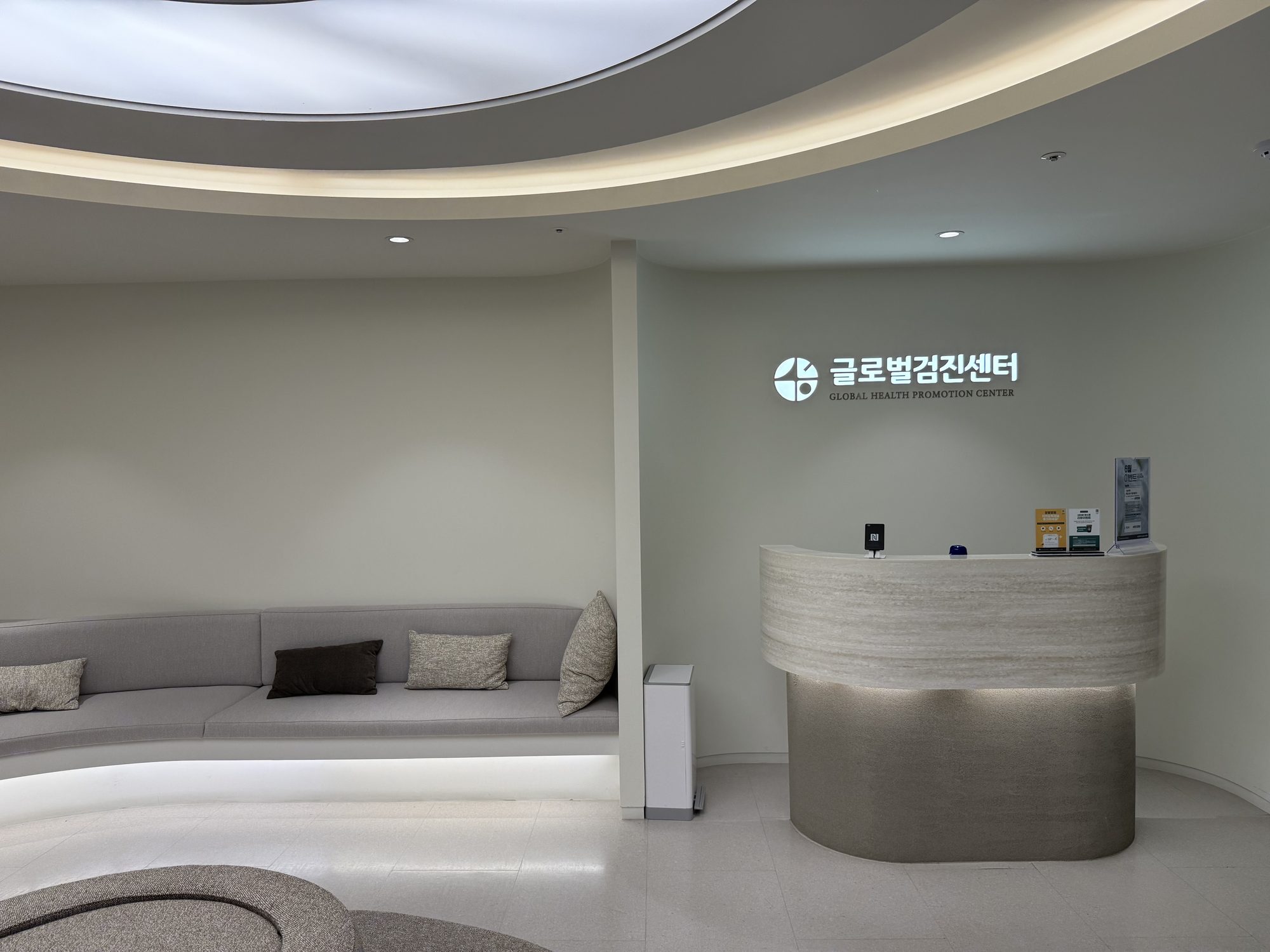
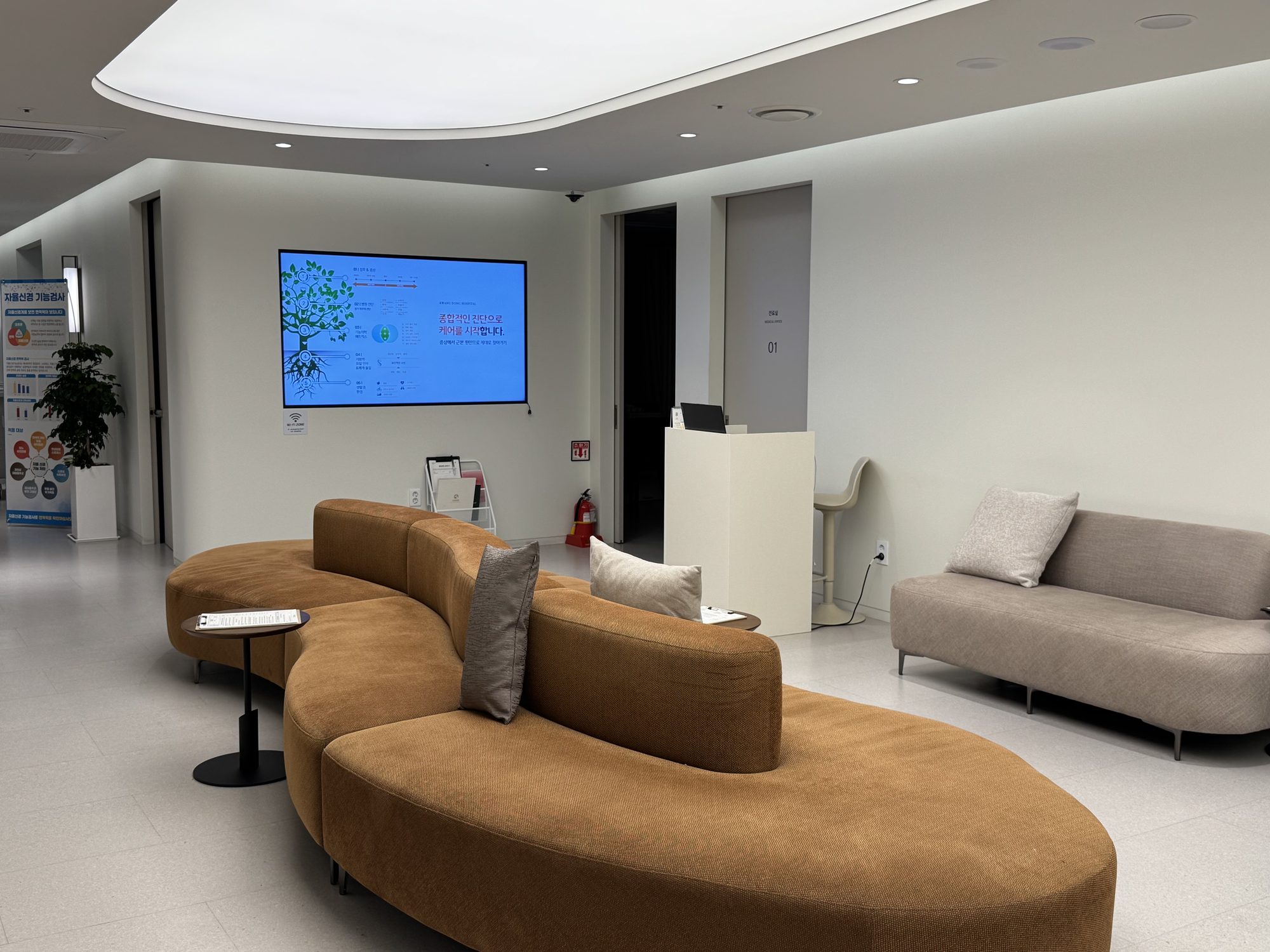
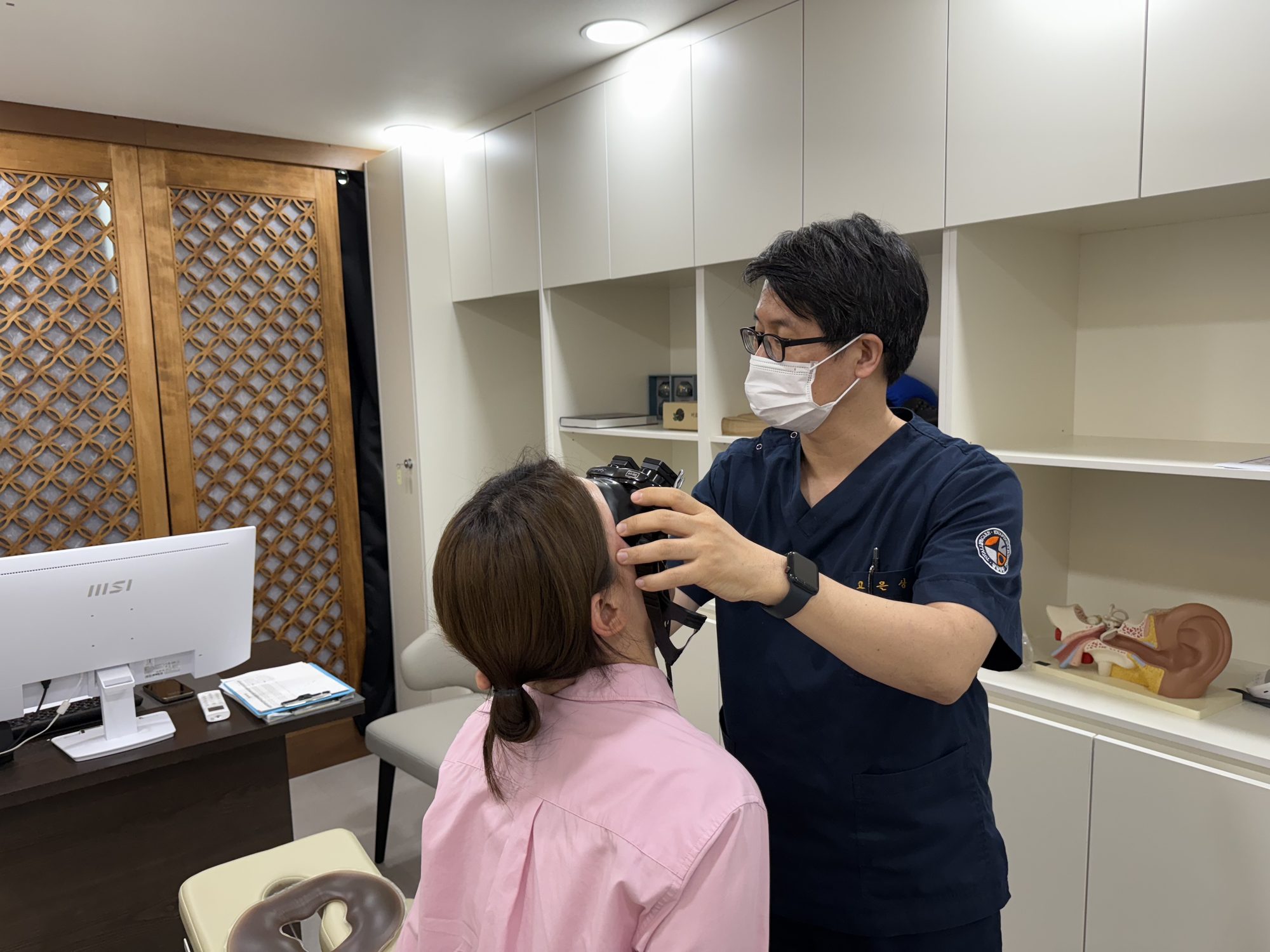
At Kwangdong Hospital's Dizziness Center on the 3rd floor, the assessment combines vestibular function tests (eye movements are used to read the state of the balance organs), neurological and autonomic tests to separate brain and autonomic causes, and a check of the heart. Neurology, rehabilitation medicine, Korean medicine and internal medicine then read the results together.
Is recurring dizziness "just your ears"?
The inner ear is the single most likely place, so this answer is often half right. The question is which inner-ear problem, because the treatments differ.
Benign paroxysmal positional vertigo (BPPV) is a brief, intense spin set off by a specific head position, such as rolling over in bed or looking up at a shelf. The NIDCD explains that it happens when loose otoconia, tiny calcium crystals, tumble into one of the semicircular canals. Vestibular neuritis is inflammation of the balance nerve, often after a virus. Ménière's disease brings episodes of vertigo together with hearing loss, ringing and a feeling of fullness in the ear.
The part people miss is the other list. Vestibular neuritis sits next to vascular vertigo, autonomic dizziness, cerebellar atrophy and gait disorders on the clinic list of the Dizziness Center. A pattern that does not fit a classic ear story deserves a neurological look, which is why Dr. Yeon-Jeong Kim of neurology handles vestibular and neurological differential diagnosis at the center.
Can stress alone explain it?
Anxiety and dizziness are tangled together, but the arrow often points the other way. The NIDCD lists fear, anxiety and panic among the symptoms of balance disorders, and notes that a balance disorder can cause psychological and emotional hardship, fatigue and depression. Being afraid of the next attack is a reasonable response to an unpredictable body.
The true part: there is a form of dizziness where psychological factors play a central role, and it is a recognised diagnosis rather than an insult. Kwangdong Hospital's own video channel has covered psychogenic dizziness as "what we look at next when the tests find nothing." The key word is next. It is a conclusion reached after the ear, brain, neck and blood pressure have been looked at, not a shortcut to skip them.
If you were told "stress" after a single quick exam, it is fair to ask which systems were actually tested.
Dizziness that needs emergency care now
Some dizziness should never wait for an appointment, at home or abroad. The U.S. Centers for Disease Control and Prevention lists sudden trouble walking, dizziness, loss of balance or lack of coordination among the signs of stroke. Its B.E. F.A.S.T. check is short enough to remember:
- Balance: sudden loss of balance or dizziness
- Eyes: sudden trouble seeing
- Face: one side droops when the person smiles
- Arms: one arm drifts down when both are raised
- Speech: slurred or strange speech
- Time: call emergency services right away, and note when the symptoms started
The NHS adds that vertigo with double vision or vision loss, hearing loss, trouble speaking, or weakness, numbness or tingling in an arm or leg needs 999 or A&E, and that you should not drive yourself. A sudden severe headache with no known cause is on the CDC list too.
Use your local emergency number. A first episode with any of these signs belongs in the nearest emergency department where you are, not on a flight to a specialist clinic.
Once the crystals are put back, is it cured?
Repositioning maneuvers move the loose crystals out of the canal where they cause trouble, and they often work quickly. The NIDCD notes that in many cases one session works, while other people need the procedure several times.
The true part is real: many people feel better the same day. The part left out is recurrence. The Dizziness Center's own answer is that repositioning often helps but recurrence is common, and that vestibular rehabilitation exercise is added to reduce it. The NIDCD also notes BPPV can follow a head injury or simply develop with age, so the conditions that let crystals loosen do not disappear after one maneuver.
Does everyone with dizziness need an MRI?
An MRI is useful when there are neurological signs, and not otherwise a routine first step. The Dizziness Center states that not everyone needs one and that it is done selectively when neurological symptoms are also present.
The reasoning is practical. A scan shows structure. BPPV, vestibular neuritis and autonomic dizziness usually leave the brain looking normal on a scan, so an MRI in those cases adds time without changing the treatment. Signs that shift the decision toward imaging include new weakness, double vision, slurred speech, or a pattern that does not behave like an inner-ear problem when the eyes are examined.
Should you stay still and wait for it to pass?
During an acute attack, sitting or lying down is sensible. Over weeks, though, avoiding movement can keep the balance system from relearning. Many people quietly start going out less for fear of falling, which is one of the six patterns the Dizziness Center lists.
Vestibular rehabilitation is exercise therapy designed to retrain the sense of balance with controlled head, eye and walking movements. The NIDCD describes it as an individualized plan built with a vestibular rehabilitation therapist. At Kwangdong Hospital, Dr. Sang-Hoon Shin, Center Director of rehabilitation medicine, leads vestibular rehabilitation exercise, and Woong-Ki Kim, Sports Medicine Team Lead, handles balance and gait assessment. The course is usually planned over 4 to 8 weeks, depending on the cause.
The true part of the myth: exercises chosen badly, or started too hard, can make you feel worse for a while. Rehabilitation is dosed to what your system can tolerate.
Risks, side effects and who shouldn't travel for this
Every option here has trade-offs, and some people will not get full relief.
- Repositioning maneuvers can briefly bring on the spinning they are meant to fix, sometimes with nausea. More than one session may be needed.
- Anti-vertigo and anti-nausea medicines may relieve symptoms but can make you drowsy, according to the NIDCD.
- Vestibular rehabilitation can make you feel slightly dizzier at first, because the exercises deliberately provoke the system so it can adapt. It takes weeks, and results vary.
- Ménière's disease has no known single cause, and some of its treatments can cause hearing loss that does not come back, so they are weighed carefully.
- Some people improve but do not fully clear. The NIDCD notes that some will need to find ways to cope with remaining dizziness.
Who should not plan a trip for this: anyone with a first sudden episode, any of the warning signs above, a recent head injury, or dizziness with fainting or chest symptoms. Those need prompt care where you are. A 4 to 8 week rehabilitation course is also a real commitment, so it is worth asking early how it would fit your stay.
Four departments, one dizzy patient
The Dizziness Center works as one program, the Vestibular Rehabilitation Clinic, where four departments move within the same flow from tests to rehabilitation exercise. The sequence on the center's page is:
- Vestibular function tests, reading eye movements to see the state of the balance organs
- Neurological and autonomic tests to distinguish causes in the brain and the autonomic nervous system
- Joint reading by neurology, rehabilitation medicine, Korean medicine and internal medicine
- Treatment by cause: repositioning for BPPV, medication, and Korean medicine when it fits
- Vestibular rehabilitation to retrain balance
Korean medicine is optional. If you want it combined, Dr. Kyu-Hyun Kim provides collaborative Korean medicine care, and the Korean Medicine Center is on the 6th floor of the same building. The hospital itself is at 612 Bongeunsa-ro in Gangnam, one minute from Bongeunsa Station exit 5, open weekdays 09:00 to 17:30 and Saturdays 09:00 to 13:30. Coordinators who speak English are on site. You can read more on the Dizziness Center page, plan your route with the reservation and directions page, or browse other articles on dizziness.
What to write down before you ask anyone
Bring a timeline, not a diagnosis. It is the most useful thing any dizziness specialist can read.
Note when the episodes started, how long each lasts (seconds, minutes, hours), what sets them off (rolling over, standing up, crowds, nothing at all), whether hearing, ringing or ear fullness change during an attack, what tests you have had and what they showed, and what medicines you take.
If you would like Kwangdong Hospital's Dizziness Center to look at it, send that timeline on WhatsApp, with photos of any reports you have. If what you describe includes the warning signs above, the honest answer is an emergency department near you first, and that is the answer to expect. Otherwise, it is a starting point for deciding whether a visit to the 3rd floor makes sense for you.
Frequently asked questions
Can anxiety alone cause dizziness?
Psychological factors can play a central role in some dizziness, and it is a recognised diagnosis. Anxiety is also a common result of balance disorders, so it is usually considered after the ear, brain, neck and blood pressure have been checked, not instead of them.
How do I know if my dizziness is BPPV?
BPPV typically causes a brief, intense spin triggered by a specific head position, such as rolling over in bed or looking up. A doctor confirms it by watching your eye movements during positional tests, which also show which canal is involved.
Can BPPV come back after the Epley maneuver?
Yes. Repositioning often helps quickly, but recurrence is common. Kwangdong Hospital's Dizziness Center adds vestibular rehabilitation exercise to reduce it.
How long does vestibular rehabilitation take?
It depends on the cause. At Kwangdong Hospital's Dizziness Center, vestibular rehabilitation is usually planned as a 4 to 8 week course.
Should I fly to Seoul if my dizziness started suddenly?
No. A sudden first episode, or dizziness with trouble speaking, weakness, numbness, vision changes or a severe headache, needs an emergency department where you are. Planned specialist care comes after that.
Sources
- Balance Disorders · National Institute on Deafness and Other Communication Disorders (NIH)
- Signs and Symptoms of Stroke · U.S. Centers for Disease Control and Prevention
- Vertigo · NHS
Written with AI assistance from Kwangdong Hospital's published center information and the medical sources listed. Not yet reviewed by a physician.