MoCA score of 24 out of 30: what a parent's memory test score means, and the other numbers on the report
A MoCA score of 24 out of 30 sits just below the 26 to 30 normal range and means the screen flagged something worth checking. It is not a dementia diagnosis; education, mood, sleep, medicines and language all move the score.
Twenty-four out of 30. That is the line many families stare at when a parent's memory test comes back, usually sent as a phone photo of a printout with no one around to explain it. What does a MoCA score of 24 out of 30 mean? On its own, it means the screen flagged something worth a closer look. It is not a diagnosis of dementia, and it does not tell you the cause. The original MoCA study set the normal range at 26 to 30, so 24 sits just below it.
What 24 is worth depends on your parent's schooling, mood, sleep, medicines and hearing on the day.
Below, the report is read line by line: which numbers screen, which ones explain, and which ones only matter in context.
What does a MoCA score of 24 out of 30 mean?
A MoCA of 24 means "look further," not "dementia." The Montreal Cognitive Assessment is a one-page screen scored out of 30, and the raw score is adjusted for education. A Cochrane review published in 2021 notes that the original study gave 26 to 30 as the normal range.
The same review shows why a single score cannot settle the question. In the studies that used 26 as the line for normal cognition, the MoCA had a sensitivity of 0.94 or more but a specificity of 0.60 or less. Put plainly, it rarely misses dementia, but it also flags many people who do not have it. The authors concluded that thresholds lower than 26 are likely to be more useful for diagnosing dementia, and that this still needs confirmation.
So a 24 is a reason to collect more information, not a reason to panic or to start any treatment.
MMSE, MoCA, SNSB, LICA: four names, two jobs
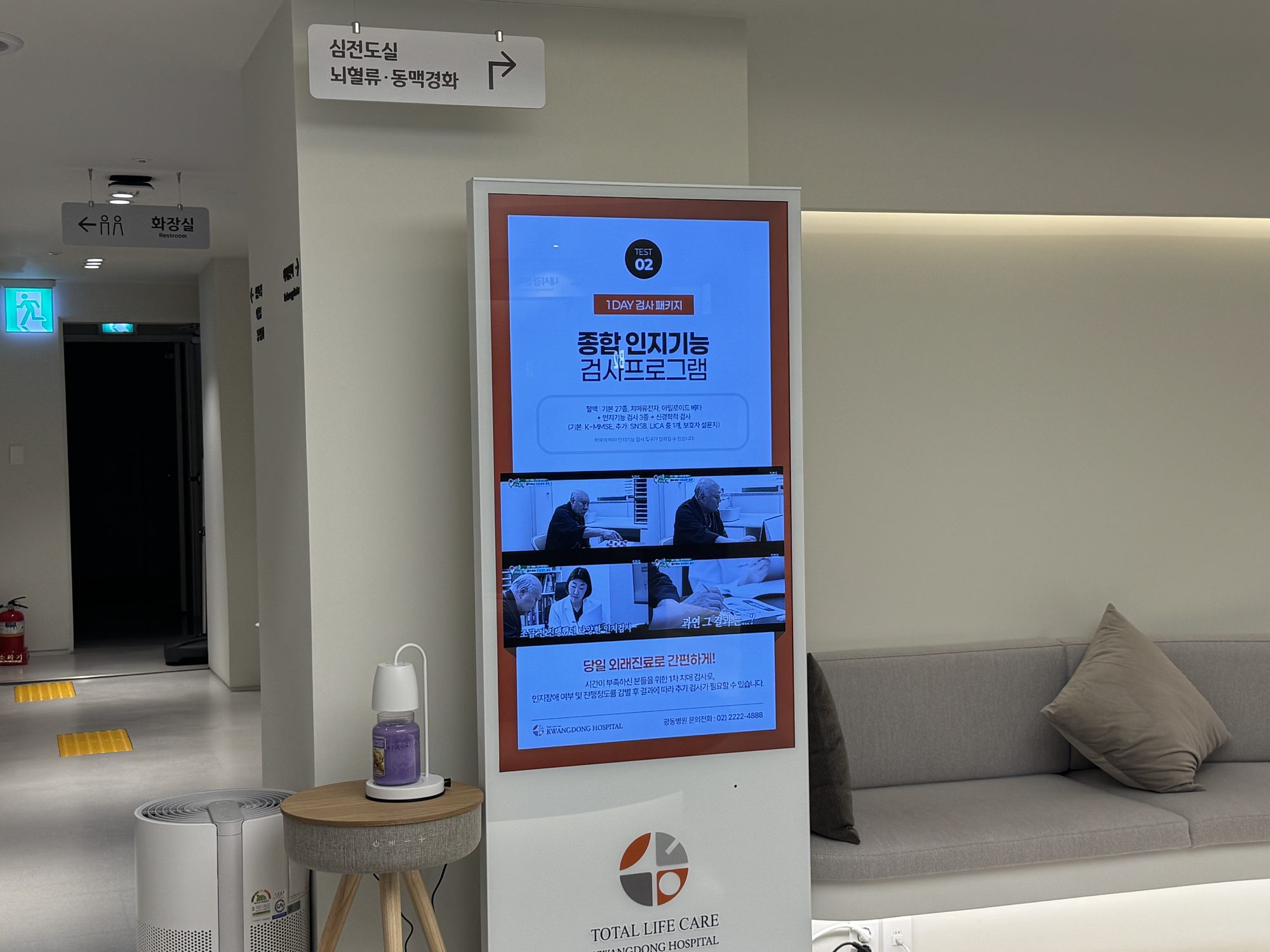
Reports from Korean hospitals often carry more than one test name, and they do different jobs. Kwangdong Hospital's Brain Health Checkup page lists screening tests such as MMSE and MoCA, and detailed assessments such as SNSB and LICA, chosen according to the clinical purpose.
| Line on the report | What kind of test | What it is used for |
|---|---|---|
| MMSE | Short screen, scored out of 30 | A brief pen-and-paper check of memory, attention, language and orientation |
| MoCA | Short screen, scored out of 30 | A one-page screen; the raw score is adjusted for education |
| SNSB | Detailed neuropsychological assessment | A profile across several thinking domains |
| LICA | Detailed cognitive assessment | A fuller profile when a screen alone does not answer the question |
The screens give one number. The detailed batteries give a pattern across domains, and the pattern is what a neurologist reads to ask "memory first, or attention first?" The NHS page on tests for diagnosing dementia puts it simply: these tests cannot diagnose dementia, but they may show memory difficulties that need further investigation.
If your parent's report only has a screen score, that is normal for a first visit. A detailed battery comes next only when the screen and the history leave the question open.
Why can two people with the same score be in very different places?
The score measures performance on one day, not the cause, so the same 24 can mean very different things. The NHS notes that test scores may be influenced by a person's level of education: someone who cannot read or write well may score lower without having dementia, and someone highly educated may score well and still have dementia.
Other things move the number too. The NHS lists depression and anxiety, delirium from an infection, an underactive thyroid and side effects of some medicines as causes of memory problems that are not dementia. Poor sleep the night before, a hearing aid left at home, or taking the test in a second language can all cost points.
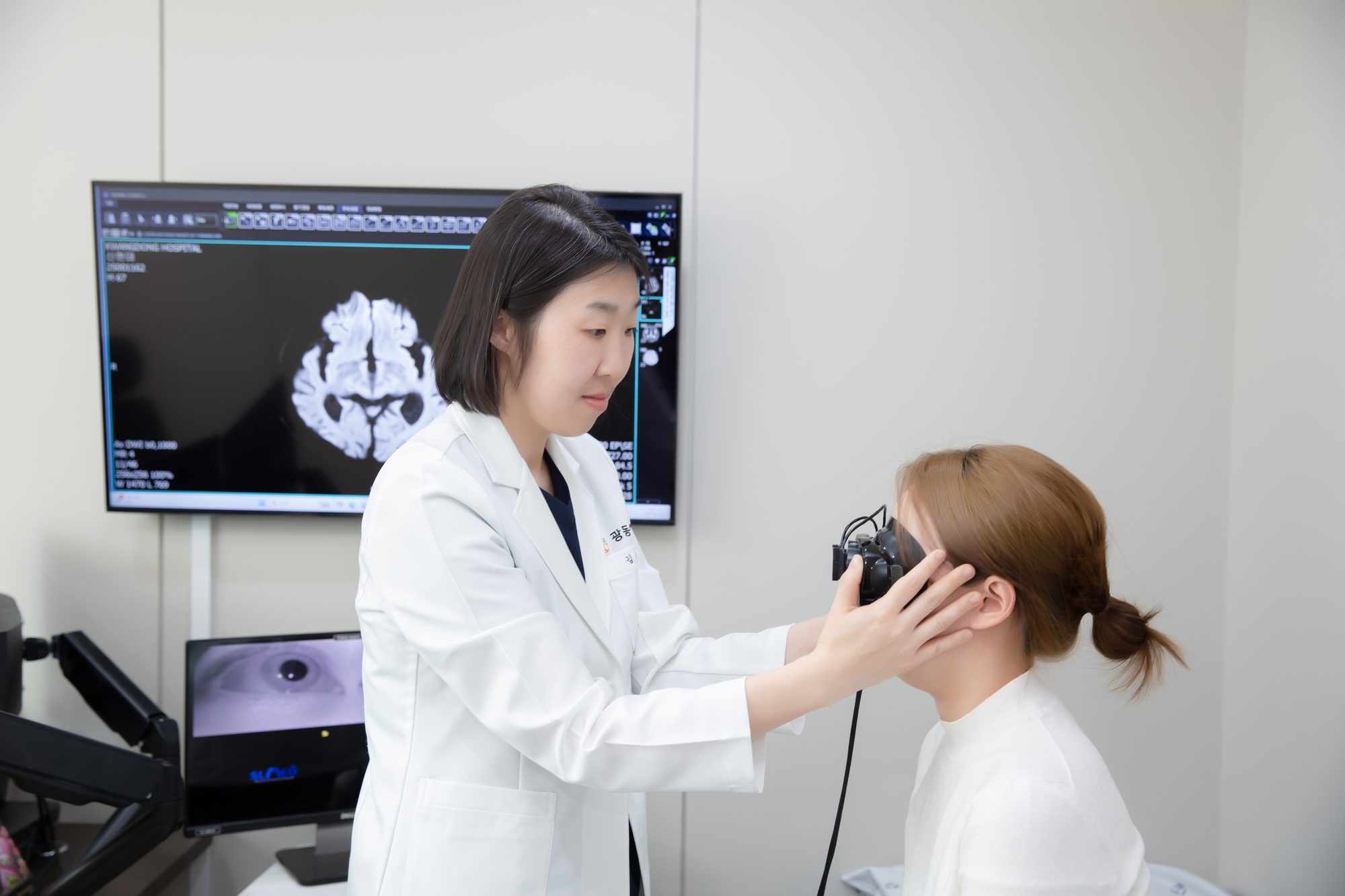
This is why the Brain Health & Dementia Center describes its first assessment as more than a test. Its page lists a consultation with the patient and the caregiver, a medical history, cognitive and daily-function tests, and a review of sleep, mood and medications. Notice the word caregiver. What you have seen at home over the past year, the repeated questions or the missed bill, is data the score cannot capture.
One question to raise early if your parent does not speak Korean: which tests can be given in their language, and how. The hospital has coordinators in English, Japanese, Russian, Chinese and Mongolian on site, but whether a specific cognitive test can be run in a given language is something to confirm before the visit, not assume.
Why are thyroid and B12 results on a memory report?
The blood results on a memory workup are there mostly to rule out other causes. According to the NHS, blood tests used to exclude other causes usually check liver function, kidney function, thyroid function, HbA1c for diabetes, and vitamin B12 and folate.
When you read your parent's report, look for these lines next to the cognitive scores. A low B12 or an underactive thyroid does not prove the memory change comes from that cause, but it is something a doctor will want to address before drawing conclusions. Kwangdong's checkup page says blood tests for health factors linked to cognitive decline are considered at the doctor's discretion, and that history of hypertension, diabetes and dyslipidemia is reviewed with them. At the center, those chronic conditions are managed with Geriatric Medicine and Internal Medicine.
What can a brain MRI show, and what can't it?
An MRI shows brain structure and blood vessels, but it cannot by itself confirm or rule out dementia. The NHS states that a scan without obvious changes does not mean someone does not have dementia.
What MRI can do, according to the NHS, is help confirm a diagnosis and its type, show blood vessel damage in vascular dementia, and show shrinkage in particular areas, such as the temporal lobes in early Alzheimer's disease.
At Kwangdong Hospital, brain MRI and MRA are done at the B1 imaging center and read by a radiology specialist. CT is used only when needed, at the doctor's judgment. Before an MRI, checks for metal in the body, implanted devices and surgical history are explained at booking, so bring a list of any implants, stents or past operations.
On a report, MRI findings appear as words, not scores: atrophy, white matter changes, small vessel disease, old infarcts. These words are read together with the cognitive pattern. A mild white matter change in a 70-year-old with normal scores means something different from the same finding with a falling score and new trouble managing money.
Do ApoE, amyloid blood tests or EEG give a definite answer?
No. Some lines on a brain report sound more final than they are. Kwangdong's checkup page lists four optional tests: an ApoE genetic test, EEG, an amyloid-related blood test and AI brain image analysis. The page is careful about each, and so should you be.
- ApoE genetic test. A genetic risk factor is not a dementia diagnosis. The hospital requires a pre-test explanation, consent and a results consultation for genetic testing.
- Amyloid-related blood test. The hospital does not offer it as routine screening for people without symptoms, or as a stand-alone means of diagnosis.
- EEG. The NHS describes EEG in dementia workups as rare, used when a specialist is worried epilepsy may be causing the symptoms.
- AI brain image analysis. An extra layer on the MRI, not a separate verdict.
These are not basic tests for everyone. Availability, eligibility and the scope of interpretation are confirmed by the doctor. If someone offers your parent all four at once without a reason tied to their history, it is fair to ask what each result would change.
Risks, limits, and who should not be tested this way
Testing has side effects of its own: worry, false alarms and results that weigh on the whole family. A borderline screen can cause months of anxiety in a person whose score was pulled down by a bad night or a language barrier, and a genetic result can weigh on siblings who never asked to know.
The hospital's own wording is direct: a checkup alone cannot detect every brain disease or predict whether dementia will develop, and normal results alone are never a reason to recommend medication or procedures across the board.
Some people should not start with a checkup at all. If your parent has already been diagnosed with mild cognitive impairment or dementia, or has clear symptoms, the hospital may recommend a neurology visit before a checkup. If daily life has changed suddenly over days, with confusion or drowsiness, that calls for urgent medical care where they are, because the NHS lists delirium from infection among the causes of memory problems.
For treatment, the same caution applies. Lecanemab is considered selectively in early Alzheimer's disease, only after an eligibility assessment that includes confirming amyloid pathology. The center's page says the expected benefits, side effects and MRI safety monitoring are explained before any decision. It is not a treatment for every case of mild cognitive impairment or dementia. Treatments such as TMS are not offered to the general public for blanket prevention.
What usually happens after a result that suggests MCI?
Mild cognitive impairment usually means regular follow-up, not immediate treatment. The U.S. National Institute on Aging says people with MCI can still take care of themselves and do their normal daily activities.
NIA estimates that 10 to 20% of people aged 65 or older with MCI develop dementia over a one-year period, and also says that in many cases the symptoms stay the same or even improve. It advises seeing a doctor or specialist every six to 12 months to track changes.
That rhythm of follow-up is the real plan for most families. At the Brain Health & Dementia Center, care after an MCI result is described as cognitive rehabilitation, risk factor management and repeat cognitive assessments.
Cognitive rehabilitation may use SuperBrain, Pascal or CogThera, matched to current function, and gait, balance and strength are assessed alongside, because falls and frailty travel with cognitive change. The center is led by neurologist Dr. Yeon-Jeong Kim, Director of Neurology at Kwangdong Hospital and Adjunct Professor of Neurology at Asan Medical Center, with Geriatric Medicine, Rehabilitation Medicine, Internal Medicine, Radiology and Korean Medicine joining as needed. Not every patient sees every department.
For a family living abroad, the practical question is where those six- to 12-month checks will happen. Keep the full report, including the domain scores, so a doctor at home can compare like with like next time.
Bringing a parent to Seoul for the assessment
The hospital asks families to bring three things: previous records (test reports, imaging and visit notes), a list of current medicines and supplements, and notes on the changes you have noticed, since when and in what situations. It also asks that, if possible, a family member who knows the patient's daily life comes along.
Test duration, the number of visits, fasting and how results are discussed depend on the tests chosen and are explained at booking. Kwangdong Hospital is at 612 Bongeunsa-ro in Gangnam, one minute from Bongeunsa Station exit 5, open weekdays 09:00 to 17:30 and Saturdays 09:00 to 13:30. The center page lists the full team, and directions are on the visit page.
If you are arranging this for a parent, start small. Send a photo of their last memory test report and their medication list on WhatsApp, with a line on what changed and when. The hospital's process begins with a coordinator reviewing previous tests, medical history and current state, and the route (checkup or neurology visit) is decided from there. More reading on this topic is in the brain health section of the community.
Frequently asked questions
Is a MoCA score of 24 considered dementia?
No. A MoCA score is a screening result, not a diagnosis. The original study set 26 to 30 as normal, and a lower score means more assessment is needed: history from family, blood tests, sometimes imaging and a detailed cognitive battery.
Which is better, the MMSE or the MoCA?
They do the same job, screening, and both are scored out of 30. The MoCA raw score is adjusted for education. Kwangdong Hospital chooses between screening tests and detailed assessments such as SNSB and LICA according to the clinical purpose.
My mother's memory test was normal but she still seems different. What now?
A normal result and the changes a family notices need to be looked at together. The Brain Health & Dementia Center reviews the pattern of change, sleep, mood, medications and daily function, then decides whether to reassess, and does not recommend medication or procedures on the basis of a normal result.
Does an ApoE gene result tell us if my father will get Alzheimer's?
No. A genetic risk factor is not a dementia diagnosis. Kwangdong Hospital treats ApoE testing as optional, and requires a pre-test explanation, consent and a results consultation.
Should we redo all the tests if my parent was already tested at home?
Bring the previous reports and medication list first. The hospital reviews whether repeat tests are needed, and if a diagnosis of MCI or dementia already exists, it may recommend a neurology visit before a checkup.
Sources
- Montreal Cognitive Assessment for the detection of dementia (Cochrane Database of Systematic Reviews, 2021) · Cochrane / PubMed Central
- Tests for diagnosing dementia · NHS
- How to get a dementia diagnosis · NHS
- What Is Mild Cognitive Impairment? · National Institute on Aging (NIH)
Written with AI assistance from Kwangdong Hospital's published center and program information and the medical sources listed. Not yet reviewed by a physician.