How long does a health checkup in Seoul take? About four hours, or one night if a colonoscopy is included
How long does a health checkup in Seoul take? At Kwangdong Hospital, about four hours as a same-day visit, or one night and two days once bowel prep and sedated gastroscopy and colonoscopy are included.
Say you land at Incheon on a Thursday evening and fly out Sunday. The question that decides your trip is not which tests you want. It is whether a colonoscopy is on the list. So, how long does a health checkup in Seoul take? At Kwangdong Hospital, about four hours as a same-day visit. With bowel preparation and sedated gastroscopy and colonoscopy, it takes one night and two days, and the night is spent in a private room on the ward.
Below is the day as it actually runs, hour by hour, so you can fit it around flights and work.
Which checkup length fits a short trip?
The same-day option fits if you can spare one day; the one-night option fits if you can spare two. The difference comes almost entirely from the bowel and from sedation.
| Same-day | One night, two days | |
|---|---|---|
| Time in the hospital | About 4 hours | Evening check-in, next day until the results briefing |
| Bowel preparation | Not part of the day | In your private room on the VIP ward |
| Endoscopy | Not included | Sedated gastroscopy and colonoscopy |
| Results | English report issued the same day | Full briefing with a specialist on day 2, plus a care plan |
| Leaving | The same afternoon | After the briefing on day 2 |
The one-night stay covers about 50 test items. The composition of either option can be adjusted after you talk to the center, and the final list is set at the pre-checkup consultation, not on a website.
The evening before: check-in and bowel prep
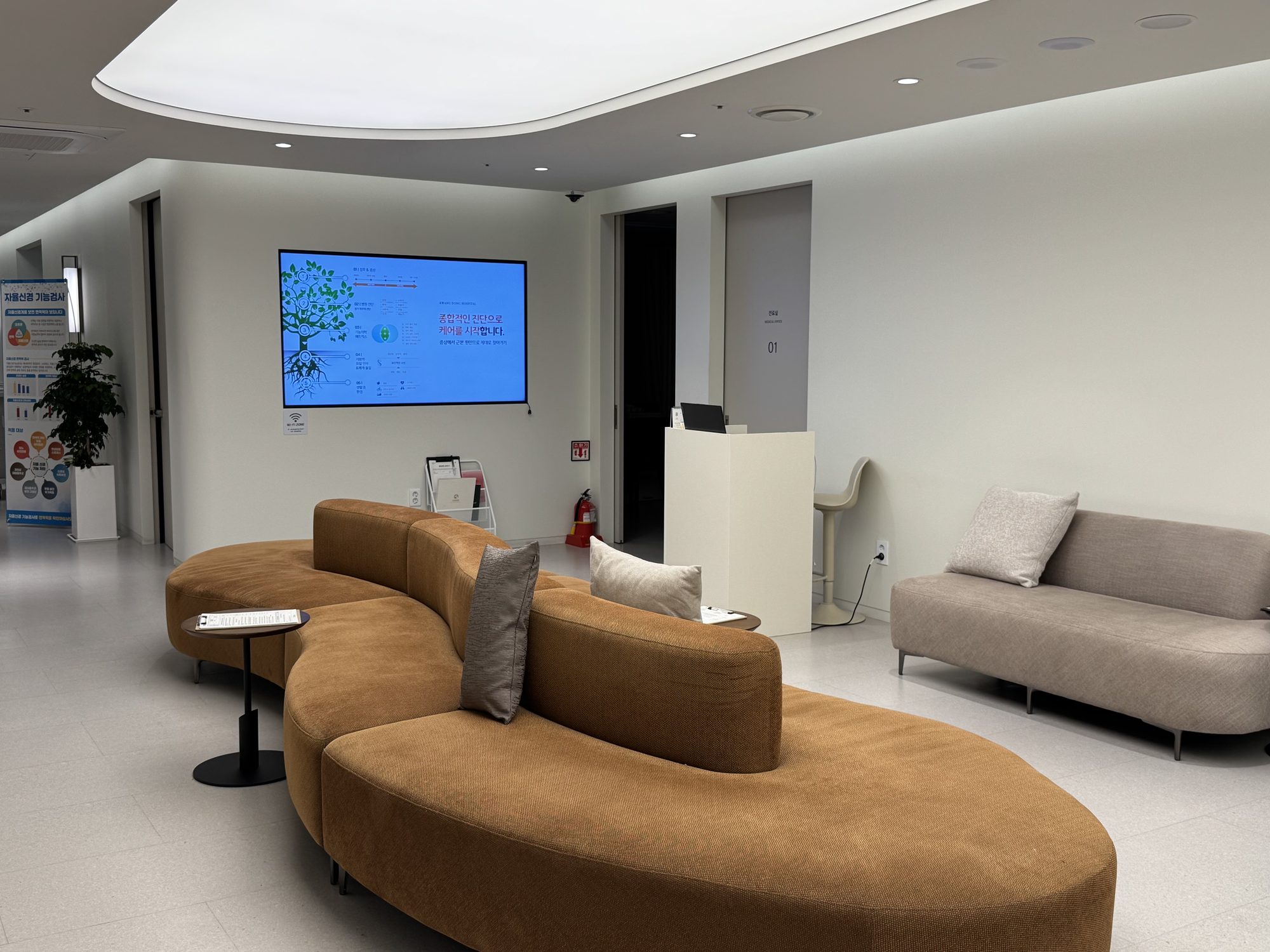
On the one-night schedule, the evening matters as much as the morning. You check in to a private room on the VIP ward, and your coordinator meets you there first. Bowel preparation is done in that room, and you do not share common spaces with other checkup patients.
The prep itself is the part people underestimate. The U.S. National Institute of Diabetes and Digestive and Kidney Diseases describes it plainly: the laxatives cause diarrhea, you should stay close to a bathroom, and it is important to finish the prep completely, because an incomplete clean-out can hide what the colonoscopy is meant to find. That is why it helps to have the bathroom a few steps from your bed.
If you are flying in that day, aim to land early enough to check in during the evening. A delayed flight that pushes you to midnight leaves very little time for the prep.
The checkup morning, floor by floor
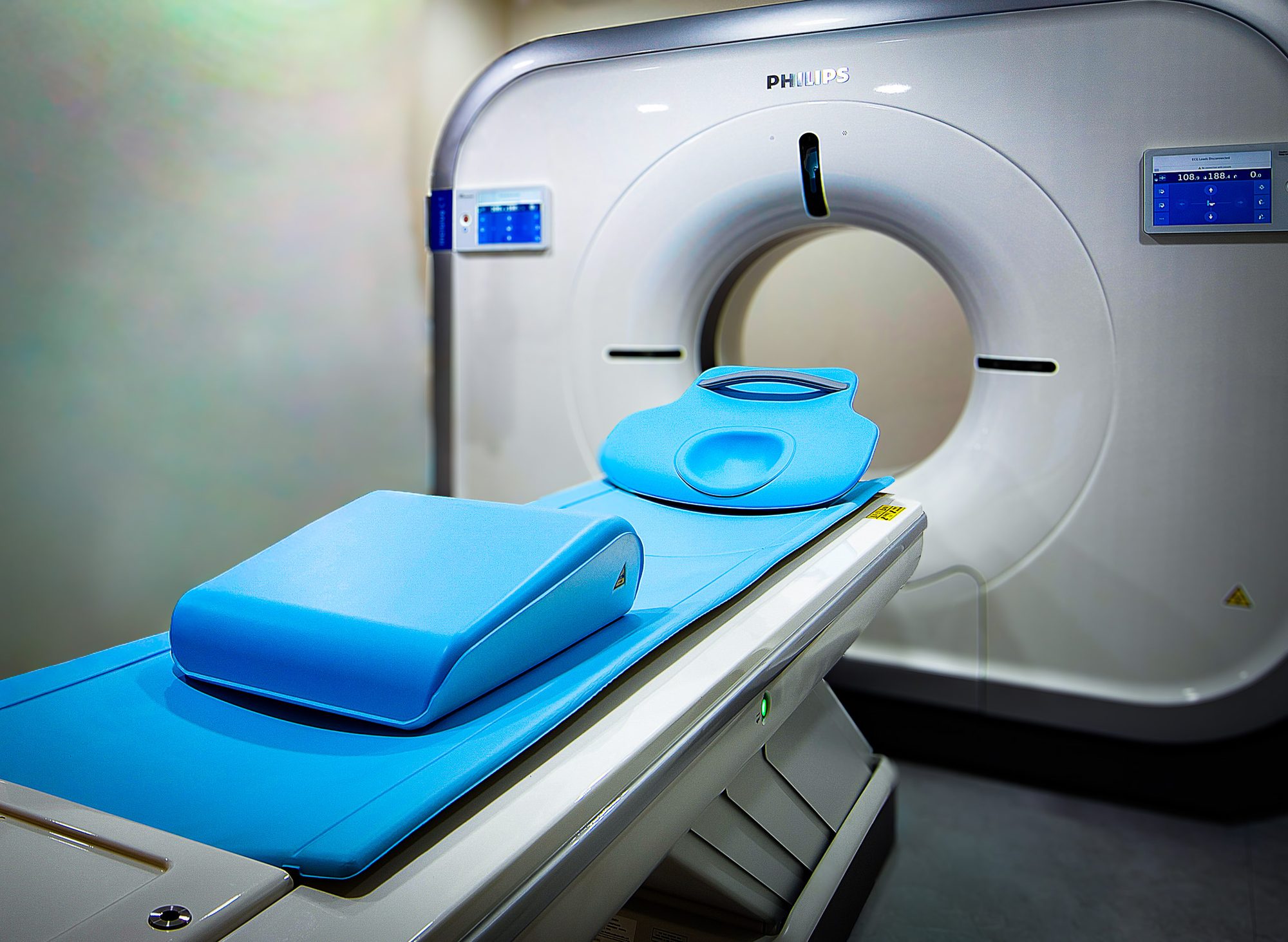
Everything happens in one building, mostly on two basement floors. Endoscopy is on B2; MRI and CT are on B1. You do not change buildings or take a taxi between tests.
- Blood tests and ECG.
- Chest CT and ultrasound of four areas. On B1.
- Sedated gastroscopy and colonoscopy. On B2 in the Endoscopy Center, in the same session, so you are sedated once.
- Recovery. Back in your room, with IV nutrient therapy while the sedation wears off.
NIDDK notes that patients usually stay 30 to 60 minutes after a colonoscopy and may feel cramping or bloating in the first hour. That hour happens in your own room, so you can change and repack without moving.
Is the report in English, and who explains it?
Yes. You receive the full report in English plus a summary. Chinese, Japanese and Russian translations can be added, and you also get a summary written to hand to your own doctor at home.
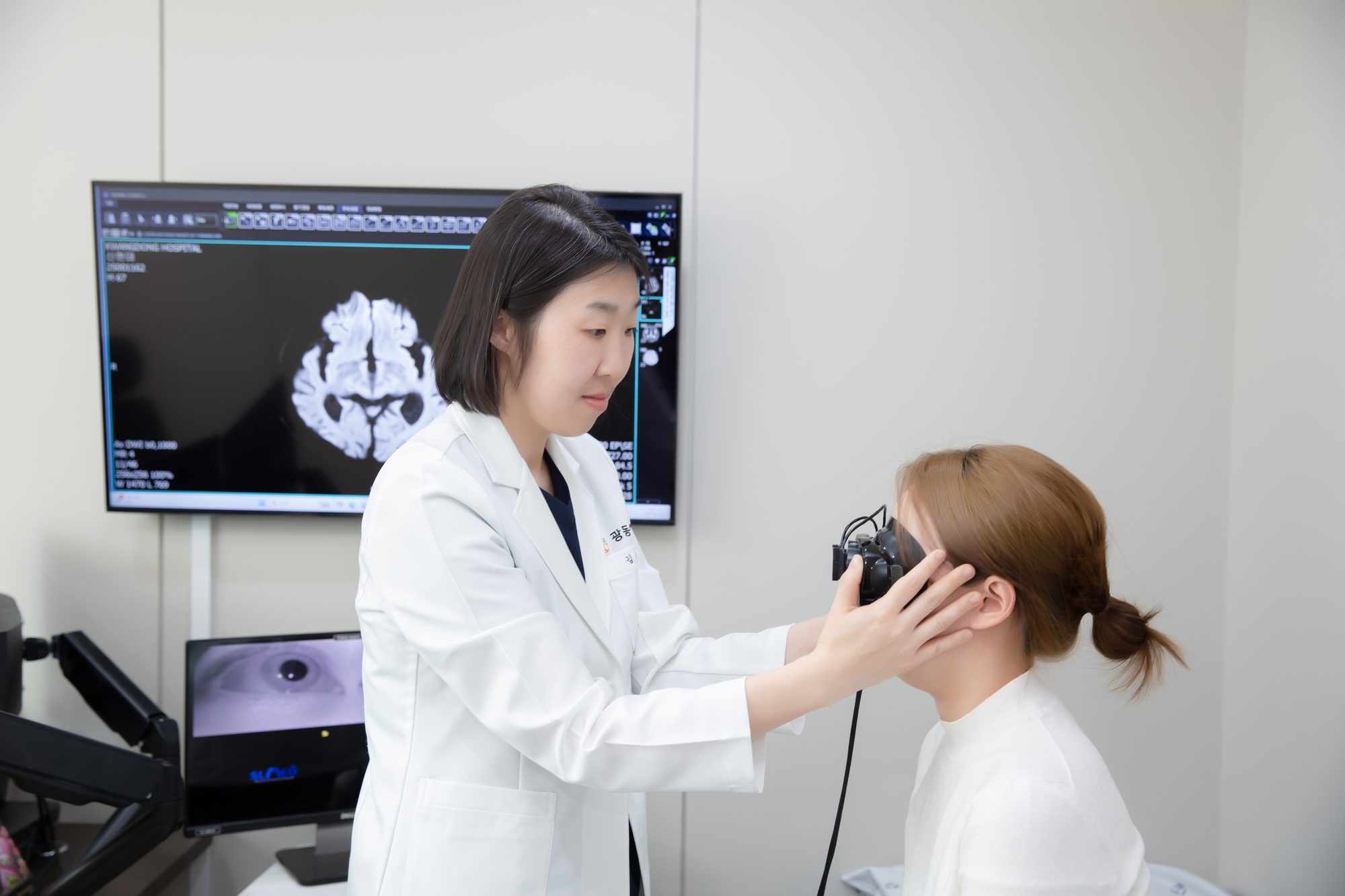
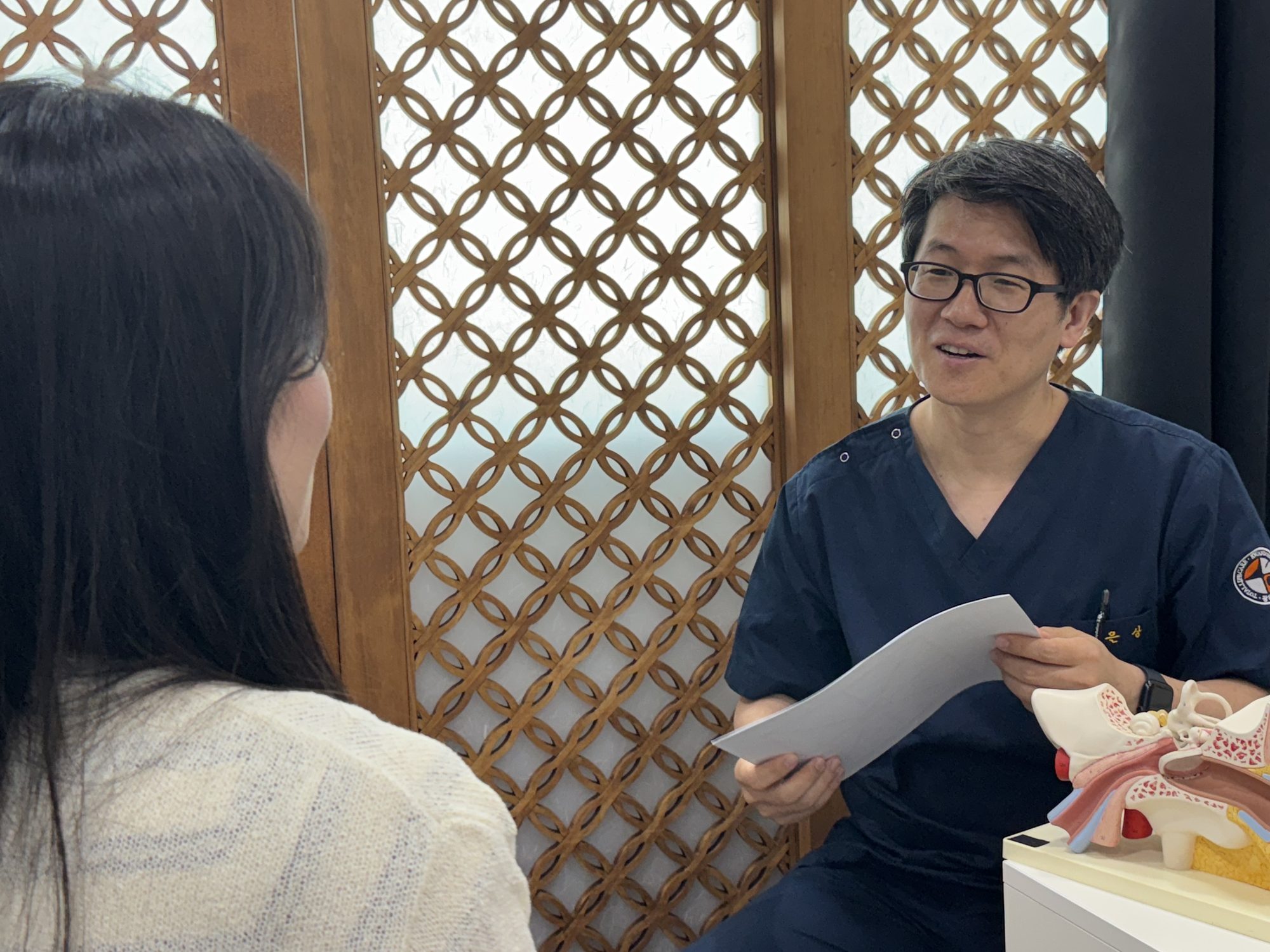
The report is not the end point. Images are read a second time by a radiology specialist, Dr. Jae-Hong Yoon, and results are explained by specialists in gastroenterology and family medicine. On the one-night schedule that briefing is one-on-one on day 2, with an interpreter. If something comes up, you are referred straight to the relevant department in the same building, and if surgery is needed you are referred to a major university hospital.
The test list itself is designed by a program development board chaired by the hospital director, Dr. Sang-Heon Cho, who planned and ran the Seoul National University Hospital Gangnam Center. That is why the items change with your age, family history and symptoms rather than coming as one fixed package.
"We planned the schedule so you do not need to come back to Korea just for a test." That is how Dr. Jin-Yong Kim, director of the Global Health Checkup Center, describes the one-night format on the hospital's program page. It is also the reason the results briefing sits inside the stay instead of arriving by email weeks later.
When can I fly after a colonoscopy?
The answer depends on what was done during the colonoscopy, and only the doctor who did it can give it to you. If a polyp was removed, NIDDK notes that delayed bleeding can occur up to two weeks after the procedure, and that is the reason to ask before you book a flight for the same day.
Two plain rules help. Keep the afternoon of the procedure day open. And book your flight home for the day after the results briefing, not the morning of it.
What can go wrong, and who should not do it this way
A checkup carries risks of its own, and they are worth knowing before you add tests.
- Endoscopy. NIDDK lists bleeding and perforation as the most common complications of colonoscopy: bleeding in about 15 of every 10,000 procedures, perforation in about 3 of every 10,000. Bleeding can be delayed by up to two weeks.
- CT radiation. The U.S. Food and Drug Administration describes the cancer risk at CT doses as very small but not zero, and points out a second cost: harmless findings that lead to more tests. A CT is worth doing when it answers a question about you, not by default.
- Findings you did not expect. A screening result can be a false alarm. Plan for the possibility that a result needs a follow-up test, at home or in Seoul.
- Sedation. The sedative needs time to wear off, so do not drive that day and keep the rest of it open.
The one-night format is not a good fit if you cannot stop certain medicines before endoscopy without your own doctor's advice, if you have a heart or lung condition that changes the sedation plan, or if you only have one day. Tell the center about blood thinners, diabetes medication and previous surgery at the pre-checkup consultation; these change what is safe to include.
How many days to plan in Seoul
Plan one weekday for the same-day checkup. For the one-night stay, plan three days on the ground: arrival and check-in, checkup and recovery, results and departure.
The hospital is open weekdays 09:00 to 17:30 and Saturdays 09:00 to 13:30, and closed on Sundays and public holidays, so a Sunday arrival works better than a Sunday checkup.
The hospital is at 612 Bongeunsa-ro in Gangnam, one minute on foot from Exit 5 of Bongeunsa Station. COEX and Bongeunsa Temple are within a ten-minute walk, which helps on the open afternoon. Visa and invitation-letter questions can be raised at booking; the center assists with them. Directions and booking details are on the reservation and directions page.
Contact after you fly home
The center contacts you five times in the twelve months after you leave: the report at D+7, a follow-up call at D+30, a remote consultation at D+90, a check-in at D+180 and rebooking guidance at D+365.
If you only remember one thing to pack, make it the list of medicines you take, with doses, in English.
The smallest useful first step is your calendar. Send the dates you are in Seoul on WhatsApp, and the center works out with you whether the same-day or one-night schedule fits around your flights, before you book anything else. More detail on what each option contains is on the Global Premium Checkup page, and the way the center works is on the Global Health Checkup Center page.
Frequently asked questions
Can I do a full health checkup in Korea in one day?
Yes. The same-day option at Kwangdong Hospital takes about four hours and you leave the same afternoon with an English report. It does not include bowel preparation and sedated endoscopy; those need the one-night stay.
Do I need to speak Korean for a health checkup in Seoul?
No. The hospital has coordinators for English, Japanese, Chinese, Russian and Mongolian on site, and an interpreter accompanies you one-on-one. English, Chinese and Japanese interpreting is standard; Russian and Arabic are optional.
Where do I do the bowel prep if I stay overnight?
In your private room on the VIP ward. You do not share common spaces with other checkup patients during the prep.
What happens if the checkup finds something?
You are referred directly to the relevant department in the same building. If surgery is needed, you are referred to a major university hospital, and recovery and long-term follow-up can come back to Kwangdong.
Is the checkup open on weekends?
The hospital is open Saturdays from 09:00 to 13:30 and closed on Sundays and public holidays. Weekday mornings are the easiest to schedule.
Sources
- Colonoscopy · National Institute of Diabetes and Digestive and Kidney Diseases (NIH)
- What are the Radiation Risks from CT? · U.S. Food and Drug Administration
- Colorectal Cancer: Screening (2021) · U.S. Preventive Services Task Force
Written with AI assistance from Kwangdong Hospital's published program information and the medical sources listed. Not yet reviewed by a physician.