What an immune checkup measures: inflammaging, NK cells, hs-CRP and the other words on your report
What an immune checkup measures is how your defenses work, not whether a disease is present: NK cell activity, T/B lymphocytes, hs-CRP and IL-6, nutrients, stress hormones and HRV, plus aging markers such as telomere length.
Inflammaging sounds like a diagnosis. It isn't one. It is a researchers' word for the low, steady inflammation that tends to build with age, and on an immune checkup it shows up as a couple of blood numbers, not as a verdict.
Here is what an immune checkup measures at Kwangdong Hospital in Seoul. The Premium Immune Checkup looks at immune cells (NK cell activity, T and B lymphocytes), inflammation markers (hs-CRP and IL-6), vitamins, minerals, stress hormones and heart rate variability. A larger option adds aging markers such as telomere length. The tests take about 2 to 3 hours.
If your yearly checkup came back "no abnormality" and you still wake up tired, you have probably read a few pages promising to boost your immunity. Below are the words you will actually hear on the day, roughly in the order you will hear them, each with what it can and can't change about your next step.
What does an immune checkup measure that a regular checkup doesn't?
A general checkup looks for disease that is already there. An immune checkup looks at how your defenses are working: which immune cells are active, how much background inflammation is present, and where your nutrients, stress hormones and autonomic balance sit. The hospital describes it as checking the balance of your defenses.
The program page puts the reasoning in one line: an immune checkup "finds weakened immune patterns even within normal values." Read that carefully. A pattern across several markers that sit inside their reference ranges is a reason to look at sleep, nutrition and recovery. It is not evidence of a hidden disease, and nobody should present it to you as one.
The physical route is short. Tests are done at the B1 Imaging Center, and the results consultation happens in 2F Internal Medicine, without stepping outside the building. The Anti-aging & Immunity Center on 2F, led by Dr. Jin-Yong Kim, Center Director (former Director of the Geriatric Center at CHA Bundang Medical Center), is where continuing care is planned. On the center's page the consultation step is stated as "Your dedicated physician explains what the numbers mean, one on one."
| Word on the report | What it is | What it can change |
|---|---|---|
| HRV | Beat-to-beat variation in heart rhythm | Sleep and stress plan |
| NK cell activity | How actively one type of immune cell responds in a lab test | Whether recovery habits get attention first |
| T/B lymphocytes | Counts of two families of immune cells | Whether a recheck or referral is sensible |
| hs-CRP, IL-6 | Background inflammation | Whether to retest after an infection settles |
| Telomere length | Protective DNA caps on chromosomes | Mostly context, rarely a decision on its own |
The first hour: questionnaire and HRV
The day starts with paper, not needles: a detailed questionnaire on lifestyle, sleep, stress and how quickly you recover. It is the frame every number is read against.
It sounds like admin, but it matters: the same NK cell result means one thing in someone sleeping seven hours and another in someone working rotating shifts.
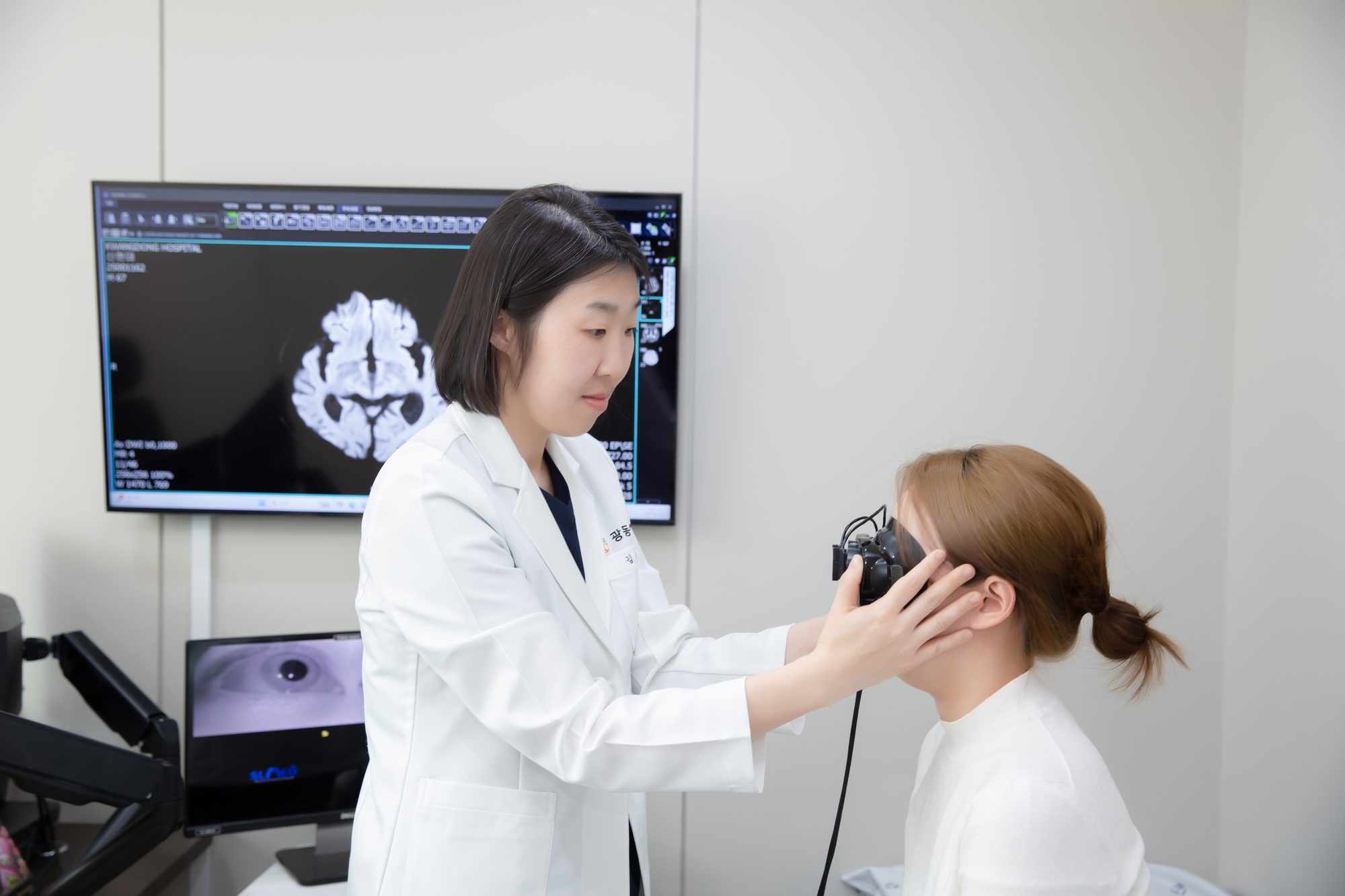
Heart rate variability (HRV) is the small, constant variation in time between heartbeats. It is used as a window on the autonomic nervous system, the part that shifts you between "alert" and "rest." The hospital measures HRV and your baseline condition "to assess the foundation of your immunity."
One practical point for travelers. HRV and stress hormones can move with a short night, a lot of coffee or a long-haul flight. If you land in the evening and test at 9 the next morning, part of what gets measured may be the trip. Arriving a day earlier, if your schedule allows it, gives cleaner numbers.
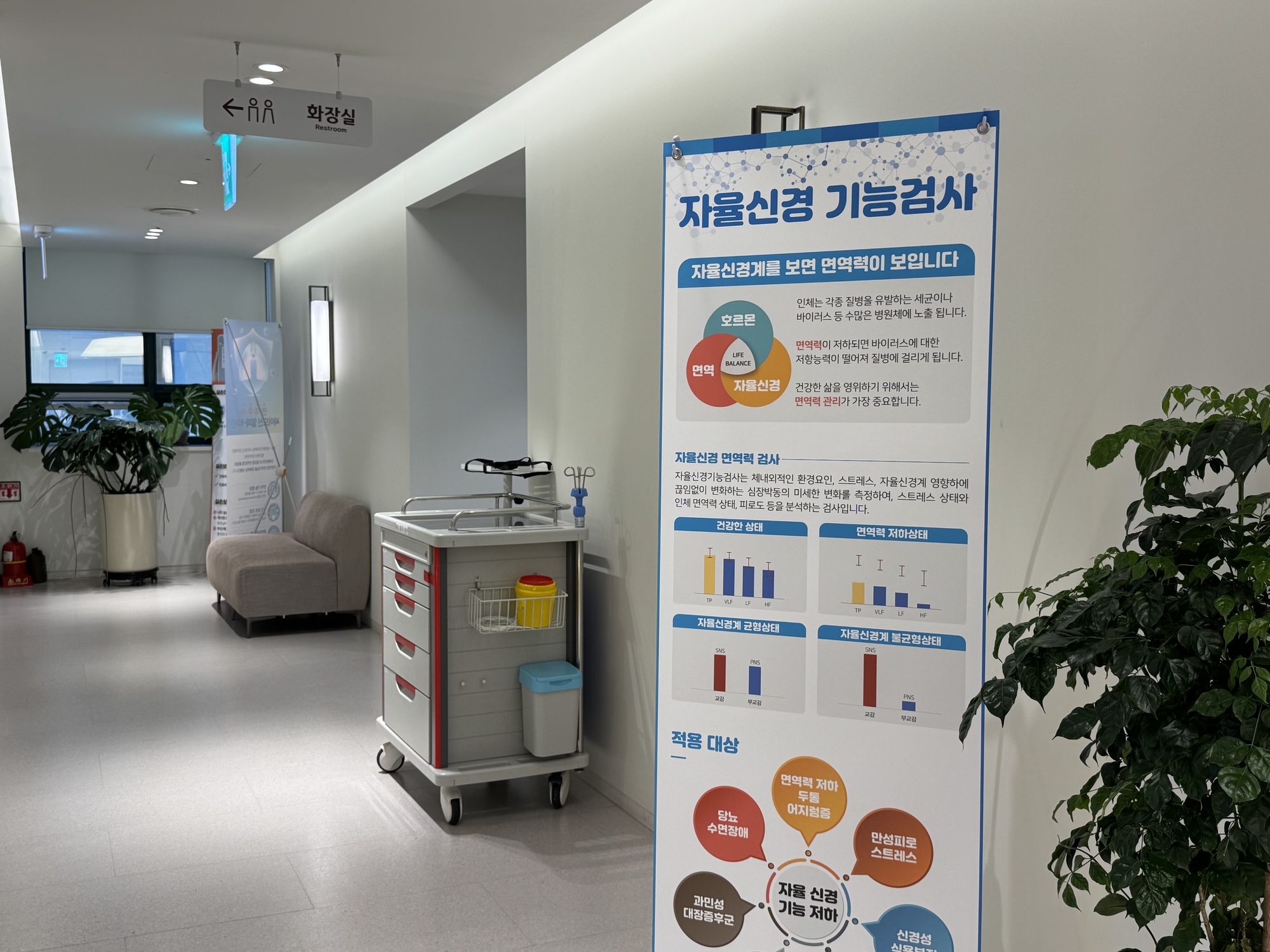
What do NK cell activity and T/B lymphocytes tell you?
NK (natural killer) cells are white blood cells of the innate immune system that can attack virus-infected and some abnormal cells without needing prior exposure. "NK cell activity" is a lab measure of how strongly they respond, not a count of how many you have.
T and B lymphocytes are the adaptive side. Broadly, T cells coordinate the immune response and kill infected cells, while B cells make antibodies. A lymphocyte analysis breaks these families into subsets.
What these results usually change is the order of the conversation. A lower activity pattern in someone with poor sleep and high stress tends to point first at recovery habits and nutrition. A result that looks clearly abnormal, rather than mildly low, is a reason for a repeat test or a referral, not for an anti-aging plan. One reading on one morning is a snapshot, and NK activity in particular can vary with stress, sleep and recent illness.
hs-CRP and IL-6, the two inflammation numbers
hs-CRP is a high-sensitivity test for C-reactive protein, a marker of inflammation. According to MedlinePlus at the US National Library of Medicine, it "measures very tiny increases in your CRP levels" and is used to estimate heart disease risk.
The same page is clear about the limit: CRP shows inflammation "but not what's causing it or where it is." It also notes that some medicines, including NSAID painkillers, may affect results.
IL-6 (interleukin-6) is a signalling protein released by immune cells. Among other things it prompts the liver to make CRP, which is why the two are often read together.
The decision these numbers drive is simple and often skipped. A cold, a dental infection or a sports injury in the past couple of weeks can raise both. If either is high and you have been unwell recently, the sensible next step is a repeat after you recover, before anyone builds a plan around it. Bring a list of everything you take, including over-the-counter painkillers and supplements.
What do inflammaging and immune aging mean on a report?
Inflammaging (also spelled inflammageing) is the tendency of older bodies toward a low-grade pro-inflammatory state. It is a description of a background trend, not a diagnosis.
In a 2018 review in Nature Reviews Cardiology, Ferrucci and Fabbri describe it as "a condition characterized by elevated levels of blood inflammatory markers" that "carries high susceptibility to chronic morbidity, disability, frailty, and premature death." They also write that whether it causes those conditions or simply marks them "is still debated." Keep both halves of that sentence in mind when you read your own result.
Immunosenescence, or immune aging, is the gradual change in how the immune system works as we get older. On this checkup it appears as "immune aging markers" in the larger option, alongside a vaccine response assessment, which looks at how well your body has responded to vaccination.
"Even with the same symptoms, recovery speed differs from person to person. Weakened immune patterns exist even within normal values." (Sang-Heon Cho, Hospital Director, on the hospital's Premium Immune Checkup page)
That is the core idea of the program, and it cuts both ways. It is why two people with the same fatigue can get different plans. It is also why a single flagged marker should be read against your questionnaire and your other numbers, never on its own.
Telomeres, oxidative stress and the microbiome come back later
The larger option, 12 items in total, adds telomere length, oxidative stress, immune aging markers, the microbiome, genetic testing and the vaccine response assessment. Some of these, telomere length and the microbiome among them, need additional analysis time, so they may not be ready on the day.
- Telomere. The National Human Genome Research Institute defines it as "a region of repetitive DNA sequences at the end of a chromosome" that protects chromosome ends, and notes that "each time a cell divides, the telomeres become slightly shorter." Length is a research marker of cellular aging. One measurement tells you where you are, not how fast you are moving.
- Oxidative stress. An imbalance between reactive oxygen molecules produced by normal metabolism and the body's ability to neutralise them. It is usually read alongside diet, smoking, alcohol and exercise.
- Microbiome. The bacterial community of the gut. Results describe composition; how to act on them is still an open area of research, so expect diet-level advice rather than precise prescriptions.
If you live abroad, ask how and when the later results reach you before you book, so a report doesn't arrive after the only consultation you can attend.
Limits, side effects and who should start somewhere else
The tests themselves are low-risk: mostly blood draws, which can leave a bruise or make some people lightheaded, especially after fasting. Fasting is recommended for some blood tests, and the hospital gives instructions when you book.
The bigger risks are interpretive:
- These markers are not cancer screening and not a diagnosis. If you have unexplained weight loss, fever, night sweats, a cough lasting more than three weeks or blood in your stool, you need a diagnostic workup first, not an immune profile.
- Normal ranges cut both ways. A borderline value can cause needless worry, and a reassuring panel says nothing about organs it didn't test.
- Supplements should follow results, not the other way around. The center's FAQ answers the supplement question with "We recommend only what your test results call for."
- Treatments after the test need their own decision. For cell therapy, the center states: "We confirm your suitability with tests before the procedure, and explain what it can and cannot do first." Ask what a treatment can't do as directly as what it can.
If you are pregnant, on immunosuppressive medication, or in active cancer treatment, say so before booking. Several markers read differently in those situations, and some follow-on treatments may not be appropriate at all. Individual results vary, and the in-person consultation decides what, if anything, fits you.
What happens after the report if you live abroad?
The integrated report explains each value and what it means, and the plan covers lifestyle, nutrition and recovery. As a rule, reassessment comes at 3 months at first, then every 6 months. For someone flying in, that is the real trade-off: the retest is where change actually shows, and it means another trip to Seoul.
The third option, PREMIUM + Continuum Care, adds a functional medicine prescription, collaborative care with Korean Medicine, a nutrition and IV program of 3 sessions, and 3-month follow-up care. Those sessions happen in person, so they suit people who live in Korea or visit regularly. Allergy and Immunology, Family Medicine, Neurology, Rehabilitation Medicine and Korean Medicine work from one report, which is the practical meaning of "integrated" here.
If a return visit isn't realistic, the report still has use at home: take it to your own doctor, who can repeat the standard markers such as hs-CRP locally. The Premium Immune Checkup page lists the three options, and the Anti-aging & Immunity Center page describes the continuing care.
Kwangdong Hospital is at 612 Bongeunsa-ro in Gangnam, 1 minute from Bongeunsa Station exit 5, near COEX. Hours are 09:00 to 17:30 on weekdays and 09:00 to 13:30 on Saturdays, and coordinators in English, Japanese, Russian, Chinese and Mongolian are on site. Since some tests need fasting, a weekday morning is the easier slot. Directions and parking are on the reservation and directions page, and other articles in this series are under immunity and anti-aging.
If you have your most recent checkup report, the one that said everything was fine, send a photo on WhatsApp with one line about what feels wrong and the dates you could be in Seoul. The center starts from your symptoms and selects only the tests that fit them, and a coordinator guides you from there.
Frequently asked questions
Is an immune checkup worth it if my regular checkup was normal?
It answers a different question. A regular checkup looks for disease; an immune checkup looks at immune cell activity, background inflammation, nutrients and stress markers. It is most useful when you have a concrete complaint, such as fatigue that sleep doesn't fix, and are ready to change sleep, diet or recovery habits based on the result.
Do I need to fast before an immune blood test?
For some of the blood tests, yes. Kwangdong Hospital recommends fasting for certain tests and gives the instructions when you book, so a morning appointment is usually the simpler choice.
How long does the immune checkup in Seoul take?
About 2 to 3 hours for the tests. Some precision tests, such as telomere length and the microbiome, need additional analysis time, so those results can come later.
Can an immune test tell me whether I have cancer?
No. Markers such as NK cell activity or hs-CRP are not cancer screening and cannot locate a disease. Symptoms like unexplained weight loss, persistent fever or blood in the stool need a diagnostic workup instead.
How often should immune markers be rechecked?
At Kwangdong Hospital's Anti-aging & Immunity Center the rule is a first reassessment at 3 months, then every 6 months. A single result is a snapshot, so the retest is where change becomes visible.
Sources
- C-Reactive Protein (CRP) Test · MedlinePlus, U.S. National Library of Medicine
- Inflammageing: chronic inflammation in ageing, cardiovascular disease, and frailty (Ferrucci L, Fabbri E. Nat Rev Cardiol 2018;15(9):505-522) · Nature Reviews Cardiology (via PubMed Central, NIH)
- Telomere · National Human Genome Research Institute (NIH)
Written with AI assistance from Kwangdong Hospital's published center and program information and the medical sources listed. Not yet reviewed by a physician.