Which English speaking hospital in Seoul do you need? Clinic, hospital or university hospital
Finding an English speaking hospital in Seoul starts with the right level of care. Pick a clinic, hospital or tertiary hospital to fit the problem, ask specific questions about English support, and call 119 in an emergency.
Most trouble with finding an English speaking hospital in Seoul starts one step before language. Korea sorts medical institutions into clinics, hospitals, general hospitals and tertiary hospitals, and walking into the wrong level for your problem usually costs more time than any language gap.
The short version goes like this. For most non-urgent problems, a clinic or a mid-sized hospital that can support you in English is enough. For an emergency, call 119. For serious or complex disease, a large general or tertiary hospital is the right place, and you'll probably be sent there by a doctor anyway.
What is the difference between a clinic, a hospital and a tertiary hospital in Korea?
Korea's Medical Service Act splits medical institutions into two groups. Clinic-level institutions mainly see outpatients. Hospital-level institutions mainly look after inpatients, and the law sets bed numbers for each step up.
| Level | Korean word | Usually suits |
|---|---|---|
| Clinic | 의원 (uiwon) | A first look, colds, rashes |
| Hospital | 병원 (byeongwon) | Tests, several departments |
| General hospital | 종합병원 | A wide range of specialists |
| Tertiary hospital | 상급종합병원 | Serious, complex disease |
A hospital needs at least 30 beds and a general hospital at least 100. A tertiary hospital is a general hospital that the Minister of Health and Welfare designates for highly specialised care of serious disease, and the designation is reviewed every three years.
Signs in Seoul follow the same words. A sign ending in 의원 is a clinic, and one ending in 병원 is a hospital. University hospitals are usually general or tertiary hospitals.
Matching the problem to the level
Visitors often head straight for the biggest name they've heard of. For a sore throat or a stomach that's been off since the flight, that usually means a long wait in a building designed for cancer, transplant and intensive care patients.
A rough way to think about it:
- Something new, mild and clearly one thing. A clinic in the right specialty, such as internal medicine, ENT or dermatology, is normally the quickest route.
- Symptoms that need tests or more than one doctor. A hospital where blood tests, imaging and several departments sit in the same building saves you from carrying results across town.
- A known serious diagnosis, or something a doctor has already flagged. A general or tertiary hospital is where that care is concentrated. People enrolled in national health insurance are generally asked for a referral letter (jinryo uiroeseo) from a clinic or hospital, so ask about it when you book.
None of this is a rule you'll be held to. It simply helps you start in a place that can finish the job.
How do you check English support before booking?
"English speaking" can mean anything from a receptionist with a few phrases to a doctor who explains your results in English. It helps to ask in a way that gets a specific answer.
Questions worth sending before you book:
- Can I book in English, by message or phone?
- Will the doctor explain the consultation in English, or is interpretation arranged?
- Does interpretation depend on the day or time of my appointment?
- Are consent forms and test instructions available in English?
- Can results and medical records be issued in English, and how long does that take?
- Who do I contact afterwards if I have a question about my results?
Answers like "interpretation can be arranged if you book ahead" are normal and honest. The detail you're looking for is whether the explanation of your diagnosis and treatment will be in a language you understand, because that's the part that matters medically.
Bring a short written summary of your problem in English, with your medicines and allergies. A translation app is fine for directions and small talk. For a consent form or a new diagnosis, ask for a person.
When is it an emergency, and who should skip the search and call 119?
Call 119 for an ambulance in an emergency. A Seoul district government page for foreign residents says there is no charge for the 119 ambulance, interpreters are available for people who don't speak Korean, and 119 can give hospital information and first-aid guidance in English and several other languages, 24 hours a day.
Go to an emergency room or call 119 straight away for things like chest pain, trouble breathing, sudden weakness or numbness on one side, sudden confusion or trouble speaking, a severe allergic reaction, heavy bleeding, vomiting blood, black or bloody stool, or a serious injury. Don't wait to find an English speaking hospital in Seoul first. The ambulance crew will take you to an emergency department that can treat you.
For non-urgent help, the same page lists the 1330 Travel Assistance Service, which runs around the clock, and the 120 Dasan Call Center for Seoul city information.
Insurance and receipts, in general terms
If you live in Korea, foreigners who have stayed more than six months must be enrolled in National Health Insurance, according to the National Health Insurance Service. The NHIS says enrolled foreigners receive the same benefits as Korean citizens.
If you're visiting, you're most likely relying on travel or international health insurance. Policies differ a lot, so ask your insurer before the visit what they need for a claim. The usual list is an itemised receipt, a medical certificate or diagnosis with a diagnosis code, and sometimes test results, ideally in English.
Then ask the hospital, while you're booking, which of those documents they can issue and in which language. Requesting them on the day of your visit is far easier than chasing them by email after you've flown home.
What Kwangdong Hospital offers in English
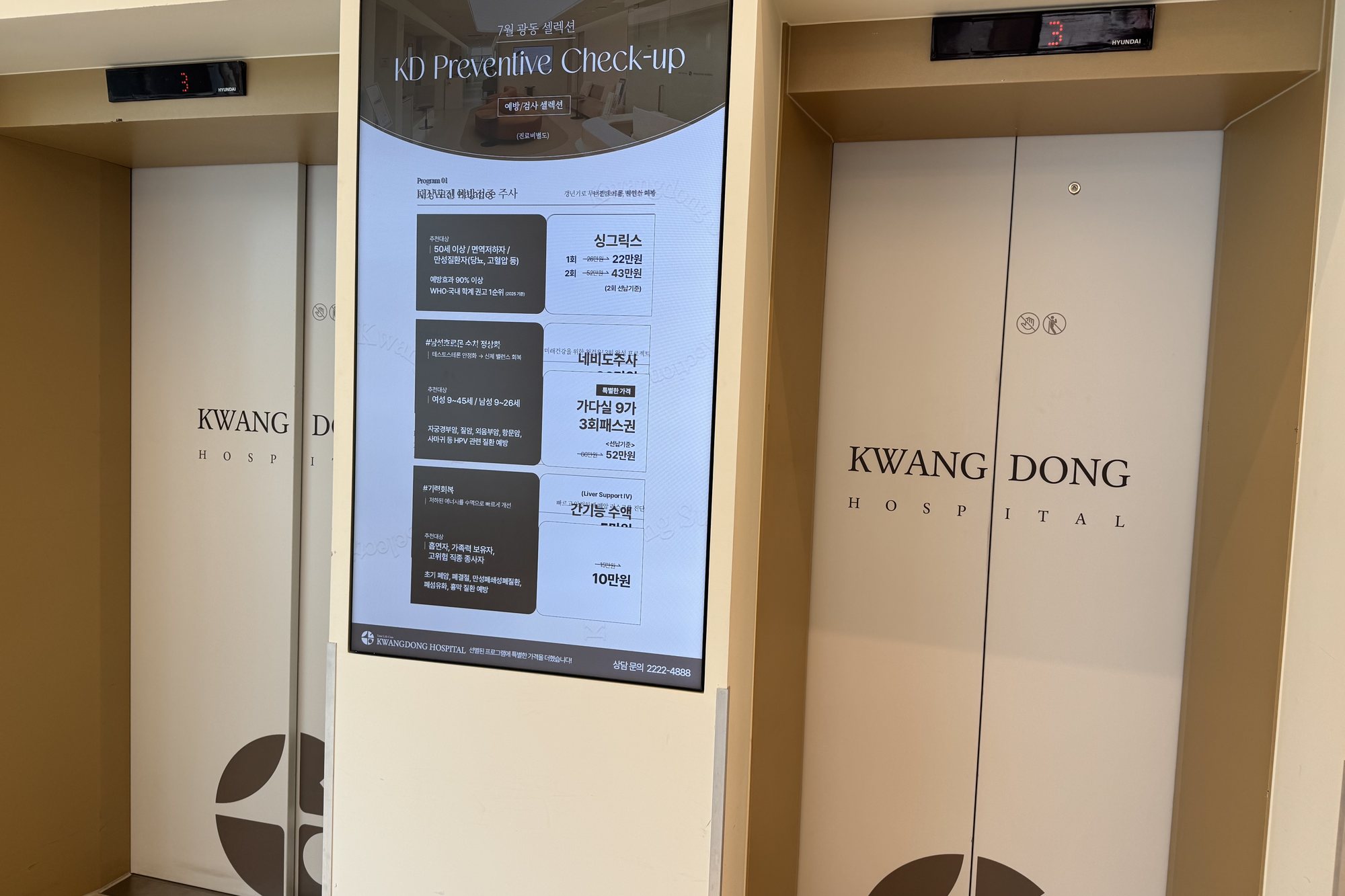
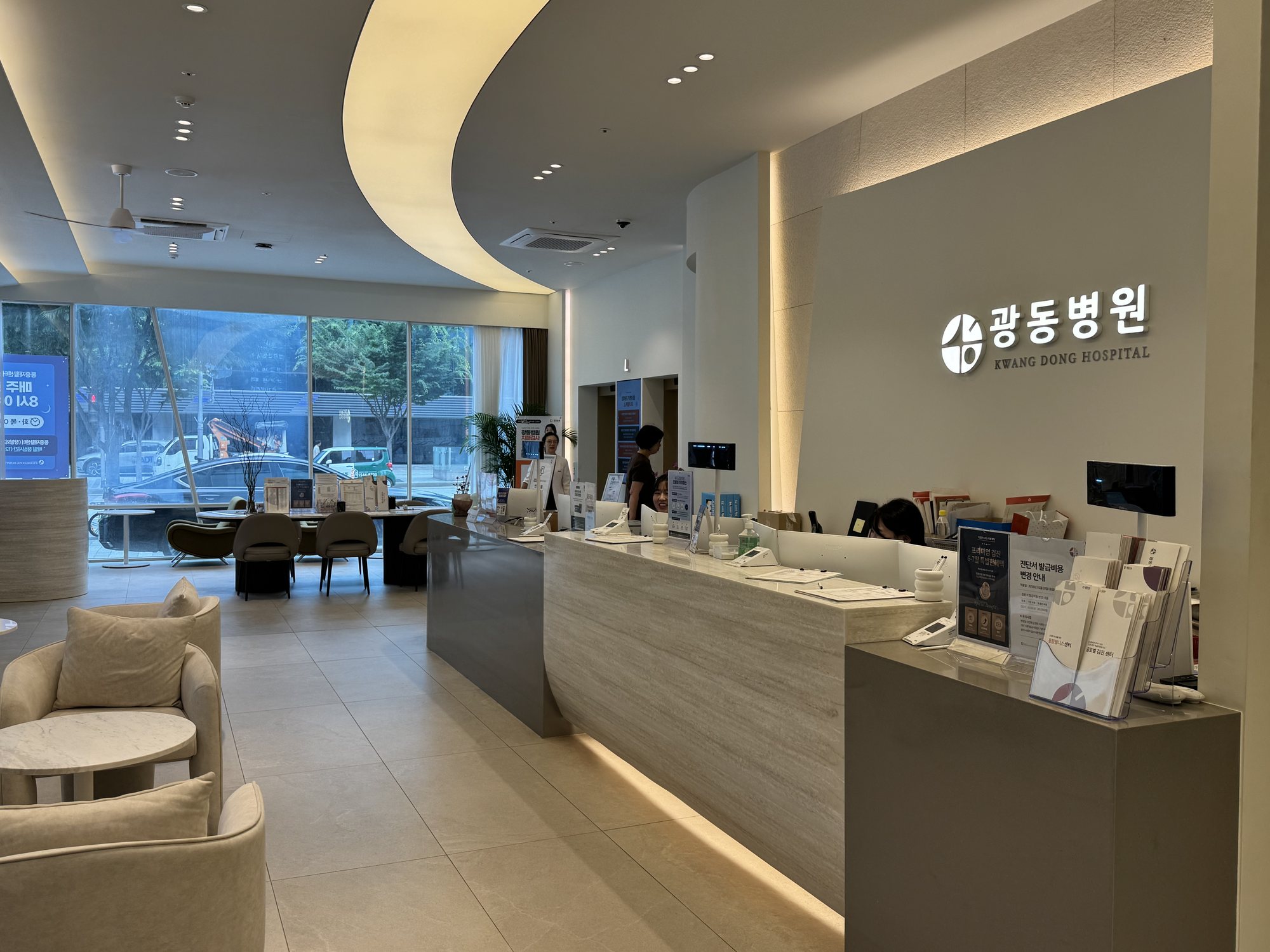
Kwangdong Hospital is in Gangnam, at 612 Bongeunsa-ro, one minute from Bongeunsa Station, Exit 5, near COEX. It has been in the same place since 1994, with Western and Korean medicine under one medical foundation, and it registered to receive international patients in 2009.
The hospital offers consultation and booking support in English, and interpretation can be arranged depending on the booking. It also supports Japanese, Russian, Chinese and Mongolian.
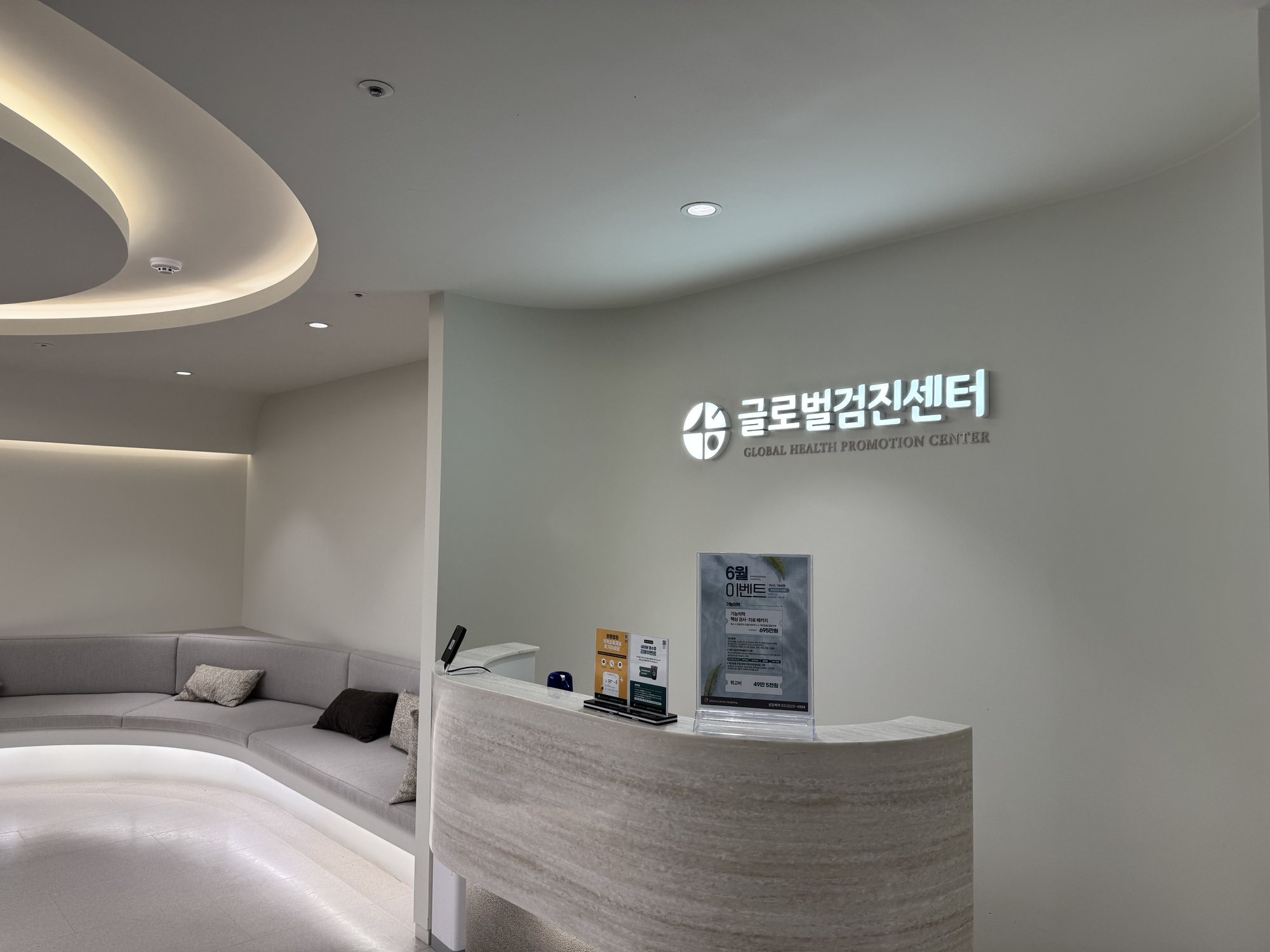
Inside one building there are ten departments, from internal medicine, neurology and rehabilitation medicine to Korean medicine and dentistry. The Global Health Checkup Center runs from B2 to 1F, with endoscopy on B2 and MRI and CT imaging on B1. If you only know your symptoms, the hospital's visit page says staff will first decide with you which department to start with.
Kwangdong does not perform surgery. When surgery or highly complex treatment is needed, it refers patients to partner hospitals, including Seoul National University Hospital, Samsung Medical Center, Asan Medical Center, Gangnam Severance Hospital, Seoul St. Mary's Hospital and Myongji Hospital, and then takes over recovery and longer-term care.
Booking a visit around a work week or a short trip
The hospital is open weekdays 09:00 to 17:30 and Saturdays 09:00 to 13:30, and closed on Sundays and public holidays. Underground parking is on B3 to B4, and the main reservation line is +82-2-2222-4888.
If a checkup is part of your plan, our post on how long a health checkup in Seoul takes walks through the day. The Global Health Checkup Center page (English) lists the programs, and the visit page (English) has directions and booking options.
To book, message the international team on WhatsApp about clinic hours and the department you think you need. A few lines on your symptoms and when they started, plus your travel dates if you're visiting, are a good start. Tests and treatment are decided by the doctor after the actual consultation.
Frequently asked questions
Do I need a referral to see a doctor in Seoul?
For a clinic or most hospitals, usually not. Large tertiary hospitals mainly care for serious disease, and people enrolled in Korean national health insurance are generally asked for a referral letter. Check the rule with the hospital when you book.
What number do I call for an ambulance in Korea?
Call 119. There is no charge for the ambulance, and interpreters are available for people who don't speak Korean. In a medical emergency, call first and look for an English speaking hospital later.
Can I use my travel insurance at a hospital in Seoul?
That depends on your policy. Many travellers pay at the hospital and claim afterwards. Ask your insurer which documents they need, then ask the hospital before your visit whether it can issue them in English.
Is a hospital in Gangnam different from one elsewhere in Seoul?
The rules are the same across Korea. What changes is convenience, such as how easily you can reach it and whether its English support fits your appointment time.
Does Kwangdong Hospital have doctors who speak English?
The hospital offers consultation and booking support in English, and interpretation can be arranged depending on the booking. Mention when you book that you need the consultation explained in English.
Sources
- Medical Service Act (English translation), Articles 3 to 3-4 · Korea Legislation Research Institute
- Medical Service · Seongbuk-gu Office, Seoul
- Mandatory National Health Insurance enrollment for foreigners and overseas Koreans · National Health Insurance Service (NHIS)
Written with AI assistance from Kwangdong Hospital's published center and program information and the medical sources listed. Not yet reviewed by a physician.