H. pylori test positive? 4 test types and the one that can mislead you
Whether a positive H. pylori result means an infection right now depends on which test you had. Here is how to read yours, what treatment and the follow-up test involve, and what to ask at Kwangdong.
Most of the checkup report is in Korean, but one line is in English and it says Helicobacter pylori, followed by the word positive. People who get a result like that from an H. pylori test usually ask two things in the same breath. Do I have a stomach infection right now? And does this have anything to do with cancer?
The answer to the first depends on which test was used, and the answer to the second is calmer than a late night search suggests. This post goes through the test types, what a positive result means for each, and what normally happens next.
Four ways to run an H. pylori test
H. pylori is a common bacterium that lives in the stomach lining. MedlinePlus, the US National Library of Medicine's patient site, says the most common way to test for it is with a sample of breath or stool, and that a blood test or a tissue sample from the stomach is used in some cases.
| Test | What it can show | Worth knowing |
|---|---|---|
| Urea breath test | Current infection | Some medicines paused first |
| Stool antigen | Current infection | Some medicines paused first |
| Blood antibody | Past or present exposure | Can't date the infection |
| Biopsy at gastroscopy | Infection and the lining | Done during endoscopy |
For the breath test, you swallow a capsule or liquid containing specially labelled urea and then breathe into a container. If H. pylori is present, it breaks the urea down and the labelled carbon shows up in your breath, as the US National Institute of Diabetes and Digestive and Kidney Diseases (NIDDK) describes it. The stool test looks for pieces of the bacterium in a sample you collect with a kit.
During a gastroscopy, the doctor can take small pieces of tissue from the stomach lining and a pathologist examines them under a microscope. That route also shows what the lining looks like, which matters if there are symptoms such as pain, bleeding or weight loss.
MedlinePlus adds a practical point that catches many people out. Before testing you may need to stop certain medicines for two weeks to a month, and that includes many of the medicines people take for stomach symptoms. Ask before you stop anything.
What a positive result actually means
For a breath, stool or biopsy test, MedlinePlus says a positive result usually means you have an H. pylori infection. A blood antibody test is different. Antibodies can stay in the blood after an infection has gone, so a positive antibody result does not always mean a current infection. That is why antibody tests are not commonly used to diagnose it, and why a positive antibody result is often followed by a test that can show what is happening now.
It also helps to know how common this is. MedlinePlus notes that most people with H. pylori never have symptoms, although in some it causes gastritis or ulcers. The Cleveland Clinic describes the infection as a risk factor for stomach cancer, and adds that most people with H. pylori won't develop it.
Where the link with cancer does matter is in prevention. The US National Cancer Institute (NCI) summarises studies showing that treating the infection reduces the risk of stomach cancer, including in people with no symptoms and in people with a family history. It also notes that stomach cancer is more common in Eastern Asia than in Western countries.

Can you do an H. pylori test at home?
Kits sold online generally check either a stool sample for H. pylori antigen or a finger-prick of blood for antibodies. The same limits apply at home as in a lab. A home antibody result cannot tell an old infection from a current one, and it cannot show whether a past treatment worked.
A home stool kit is closer to what a clinic would use, but any positive result still leads to a doctor, because treatment means prescription antibiotics chosen for you. If you are already on acid-reducing medicine, the result may also be less reliable, for the same reason clinics ask you to pause it.
What happens after a positive result
If the infection is confirmed, treatment usually combines antibiotics with a proton pump inhibitor (PPI), a medicine that cuts stomach acid. MedlinePlus and the Cleveland Clinic both describe this, sometimes with bismuth added, and the Cleveland Clinic says the combination is usually taken for 14 days. Finish the whole course. If side effects make that hard, call the prescribing doctor rather than stopping on your own.
Whether you also need a gastroscopy depends on your age, symptoms and any warning signs. The NHS notes that a GP may test for H. pylori with a breath, stool or blood test and may also refer for a gastroscopy.
Afterwards comes a check. MedlinePlus says a repeat test may be ordered to make sure the bacteria are gone, since any that remain can grow back and cause symptoms again. A breath or stool test is the usual choice, timed some weeks after the course so the medicines don't hide bacteria that are still there. An antibody blood test is not useful for this step.
While you are being treated, avoid anti-inflammatory painkillers such as ibuprofen unless a doctor has said they are fine. Both the NHS and the Cleveland Clinic flag them, because they raise the risk of ulcers.
Some symptoms should not wait for an appointment. MedlinePlus lists black or tarry stool, blood in vomit or vomit that looks like coffee grounds, sudden severe belly pain that does not go away, and dizziness or fainting as reasons to get medical help right away. In Korea, call 119.
Testing and treatment at Kwangdong Hospital
At Kwangdong Hospital, an H. pylori antibody test is part of the Digestive precision module that can be added to a Standard or Premium checkup at the Global Health Checkup Center. The same module lists sedated gastroscopy and colonoscopy, a gut microbiome test and pancreatic MRI.
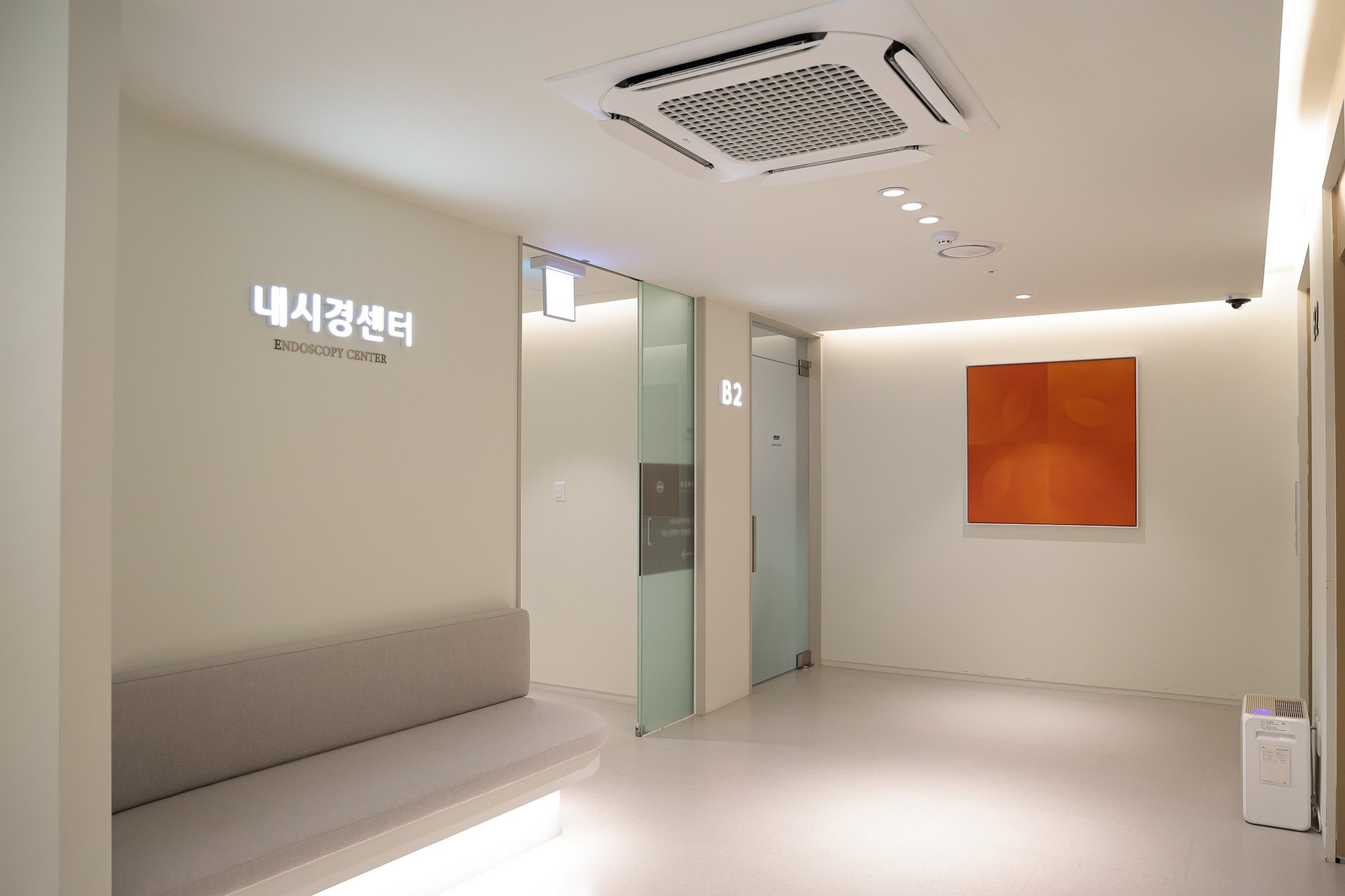
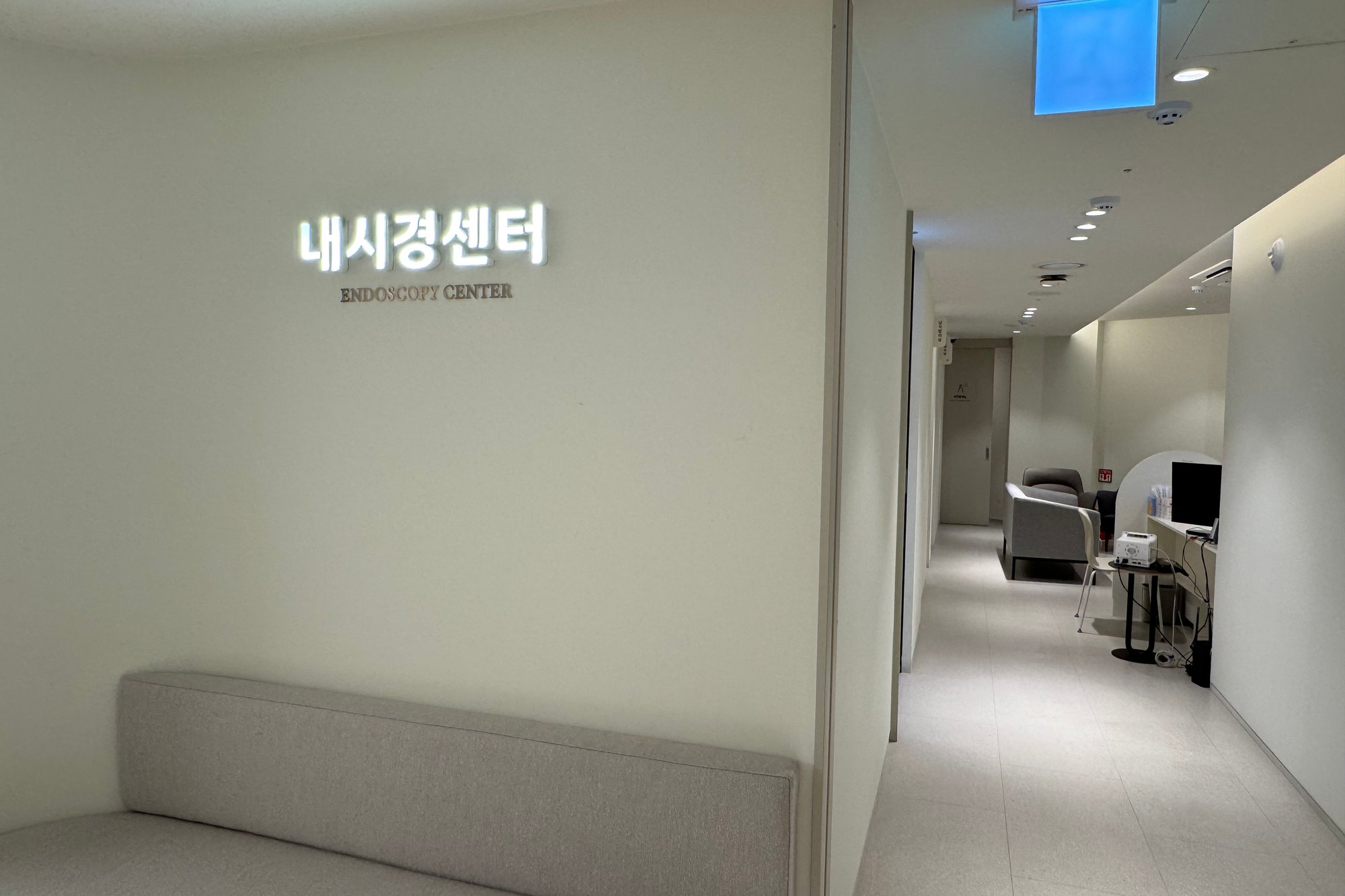
The Endoscopy Center on B2 publishes its route in five steps. There is a pre-exam visit to review symptoms and earlier tests, then a sedated endoscopy done by the endoscopy medical team. If an abnormal finding appears, tissue is sampled right away, and checking for H. pylori is one of the reasons the gastroenterology department lists for a biopsy. A specialist then reads the images a second time.
You hear the preliminary findings on the day. Biopsy results come back separately, once the pathology reading is done. The hospital states that when gastritis or H. pylori infection is found, care continues on to eradication treatment rather than stopping at the report, and gastroenterology on 2F picks up any abnormal finding.
Kwangdong's pages do not say whether a breath or stool test can be booked on its own, so ask when you book if that is the test you want. For how a sedated gastroscopy fits into a short stay, read our guide to endoscopy in Korea and your trip.
If you are bringing a result from home
A result from another country or a home kit is still useful. Bring it, along with the date of the test and which type it was. The doctor will also want to know a few things that change the next step.
- Any acid-reducing medicine, antibiotic or bismuth product you have taken in the past month
- Whether you were treated for H. pylori before, and with what
- Any allergy to antibiotics, especially penicillin
- Stomach cancer in a parent, brother or sister
- Symptoms such as weight loss, trouble swallowing or black stool
The hospital is at 612 Bongeunsa-ro, Gangnam, one minute from Bongeunsa Station Exit 5. Hours are 09:00 to 17:30 on weekdays and 09:00 to 13:30 on Saturdays, closed on Sundays and public holidays. Booking details are on the visit page.
Frequently asked questions
Does a positive H. pylori antibody test mean I have an active infection?
Not necessarily. MedlinePlus explains that antibodies can come from an infection you had in the past, so a positive antibody result does not always mean a current one. A breath, stool or biopsy test is usually used to show whether the bacteria are there now.
Which test is used to confirm H. pylori?
Breath and stool tests are the most common ways to look for a current infection. If you need a gastroscopy anyway, a biopsy taken during it can check for H. pylori and show the state of the stomach lining at the same time. The doctor chooses based on your symptoms, age and medicines.
Do I need a gastroscopy if I test positive?
Not always. It depends on your age, symptoms, warning signs such as weight loss or black stool, and family history. The NHS describes a gastroscopy as something a doctor may arrange alongside H. pylori testing, not something everyone with a positive result has.
How do I know the treatment worked?
A repeat breath or stool test, done some weeks after the course of medicine, is the usual way to check. An antibody blood test is not useful here because antibodies can stay positive after the bacteria are gone.
Can I get tested for H. pylori at Kwangdong Hospital?
An H. pylori antibody test is listed in the Digestive module that can be added to a checkup, and biopsies taken during gastroscopy can check for H. pylori. Kwangdong's pages do not say whether a standalone breath or stool test is available, so ask when you book.
Sources
- Helicobacter pylori (H. pylori) Tests · MedlinePlus, US National Library of Medicine
- Diagnosis of Peptic Ulcers (Stomach Ulcers) · NIDDK, National Institutes of Health
- H. Pylori Infection · Cleveland Clinic
- Helicobacter pylori (H. pylori) and Cancer · National Cancer Institute
- Stomach ulcer · NHS
Written with AI assistance from Kwangdong Hospital's published center, checkup and department information and the medical sources listed. Not yet reviewed by a physician.