Five things forum threads leave out about a Korean medicine clinic in Seoul
A Korean medicine clinic in Seoul that sits inside a hospital is more than acupuncture: at Kwangdong Hospital the exam can include blood tests, herbs are checked against your medicines, and some care is shared with neurology.
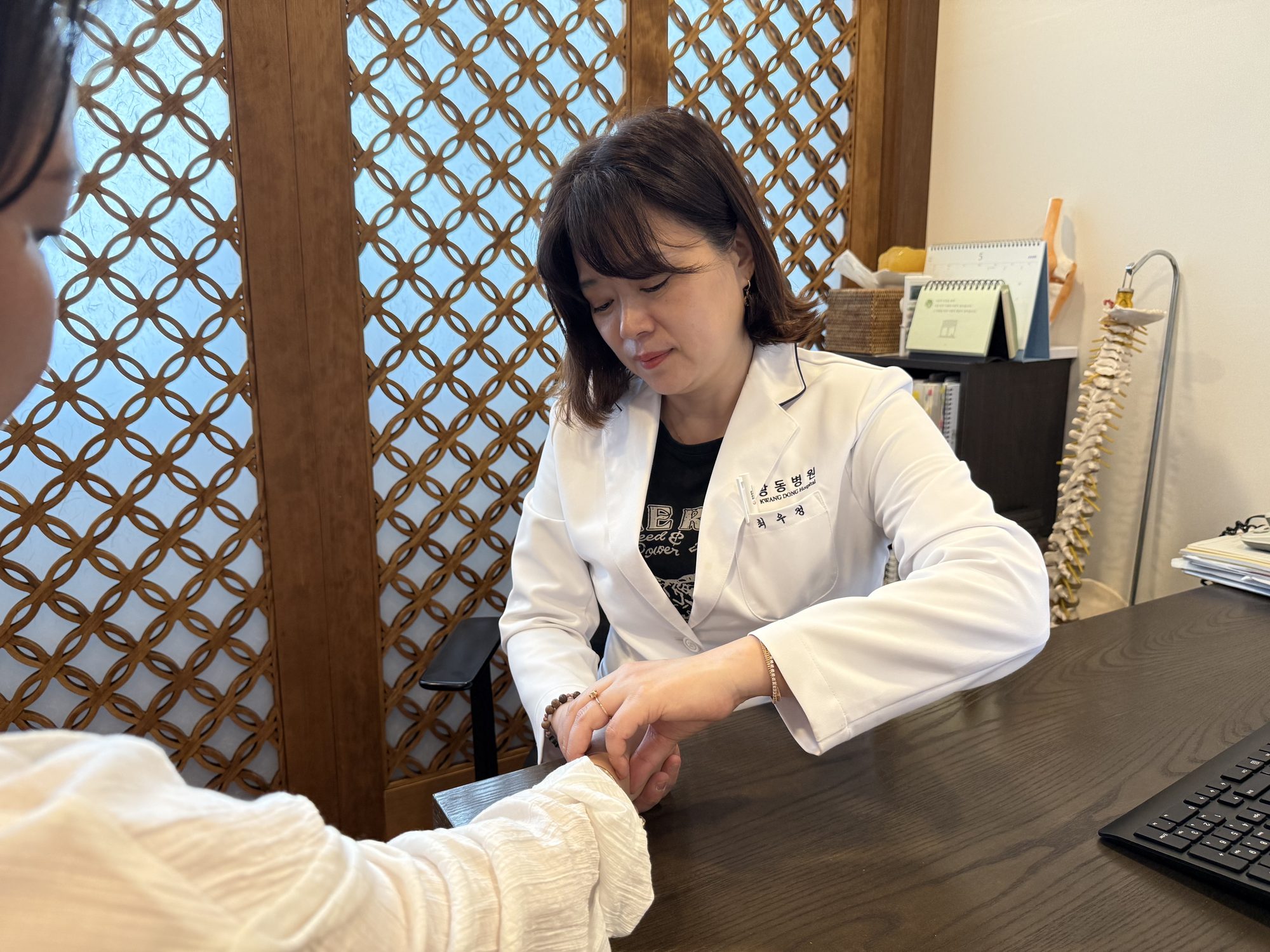
Reddit threads about Korean medicine in Seoul tend to cover the same ground: the needles were thinner than expected, the clinic smelled of herbs, someone's back felt different the next morning. What those threads rarely mention is the blood test, the medication list, and the neurologist down the hall.
At a Korean medicine clinic in Seoul that sits inside a hospital, those are often the parts that shape the visit. At Kwangdong Hospital, the Korean Medicine Center on 6F uses acupuncture, pharmacopuncture, Chuna and herbal medicine, and reads blood and imaging results from the same building alongside its own exam.
If you have been reading threads for a week and still can't tell whether this is a medical appointment or a wellness add-on to a trip, the five patterns below are what tends to surprise English-speaking visitors. None of them is one patient's story. They are the questions that keep coming back.
Is a Korean medicine clinic in Seoul only about acupuncture?
No. Acupuncture is the treatment people expect, but at Kwangdong Hospital's Korean Medicine Center it is one of four, alongside pharmacopuncture, Chuna and herbal medicine.
The terms get blurred in forum posts, so here they are in plain words:
- Acupuncture: thin needles placed at specific points on the body.
- Pharmacopuncture: a Korean medicine technique in which an herbal preparation is injected at acupuncture points.
- Chuna: manual therapy, where the practitioner's hands work on joints, the spine and soft tissue.
- Herbal medicine: a combined prescription of herbs, composed for one person rather than taken off a shelf.
Which of these you get is decided after the exam. The center describes its treatment as "composed for your condition", so two people with the same complaint can leave with different plans.
The range of conditions is wider than most visitors assume. Inside the center there is a Brain Function Clinic, a Dizziness Clinic, a Five-Element (Ohaeng) Clinic and a Pain Clinic, and the conditions it lists include head tremor, hand tremor, facial nerve palsy, hemifacial spasm, eyelid twitching and facial pain. People who arrived thinking Korean medicine was mainly for sore backs are often surprised by that list.
The first visit can include a blood test
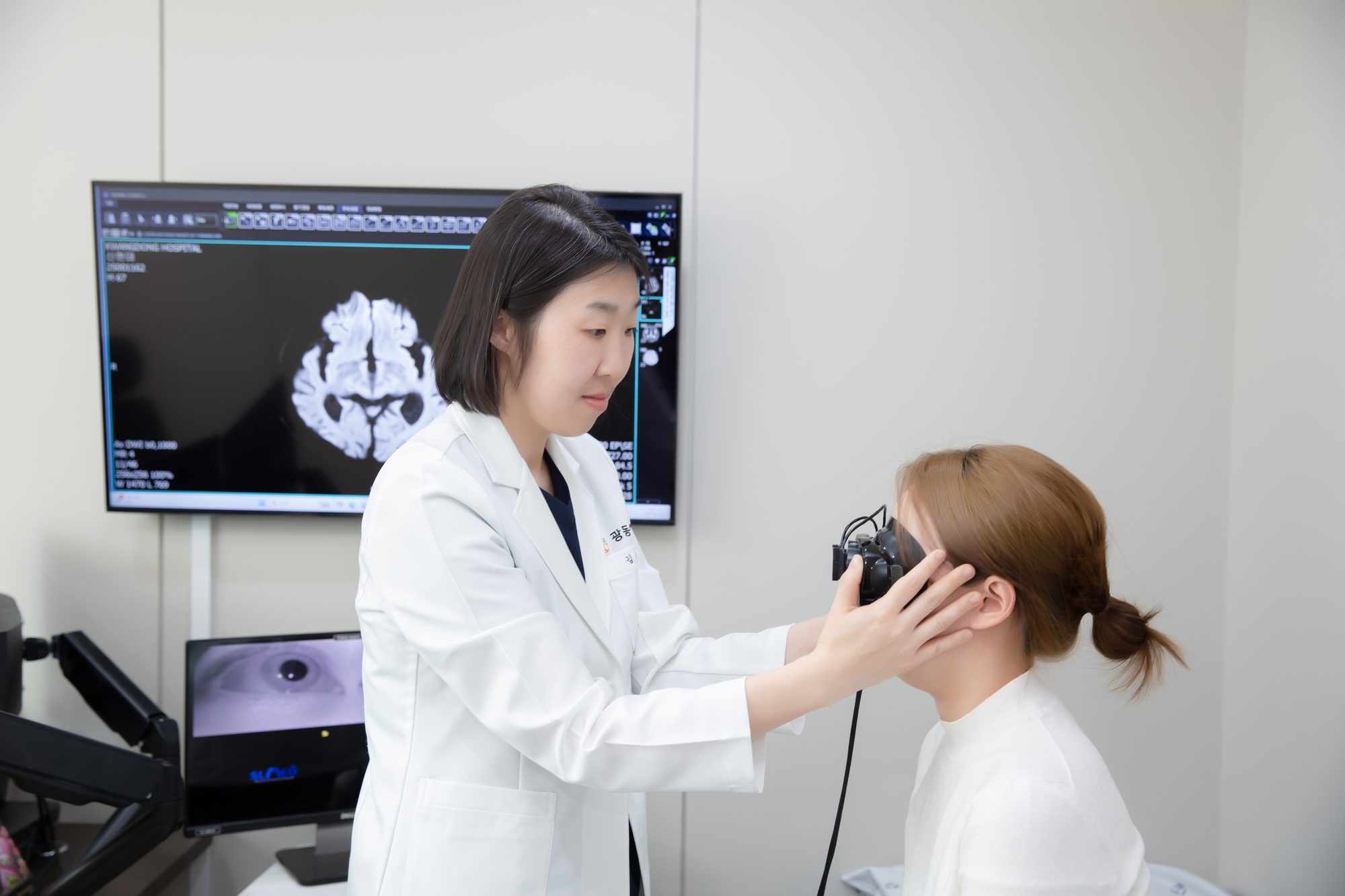
Many visitors expect a pulse reading and a few questions. At this center, the Korean medicine exam assesses constitution and overall condition, and when needed, blood and imaging tests are done in the same building. The center's own wording is that it does not judge "by pulse and interview alone".
Its process has five steps:
- A Korean medicine exam of constitution and overall condition.
- Linked testing, when needed, without leaving the building.
- An integrated assessment that reads Western test results and the Korean medicine diagnosis together.
- Treatment: herbal medicine, acupuncture and pharmacopuncture, composed for the condition.
- For acute conditions, intensive inpatient care on the 7th–8th floor wards.
For a traveler this has two practical effects. Bring recent results from home, such as blood work, imaging reports or a discharge summary, because they are part of what gets read. And expect a first visit to take longer than a spa session, since a test can sit between the exam and the treatment.
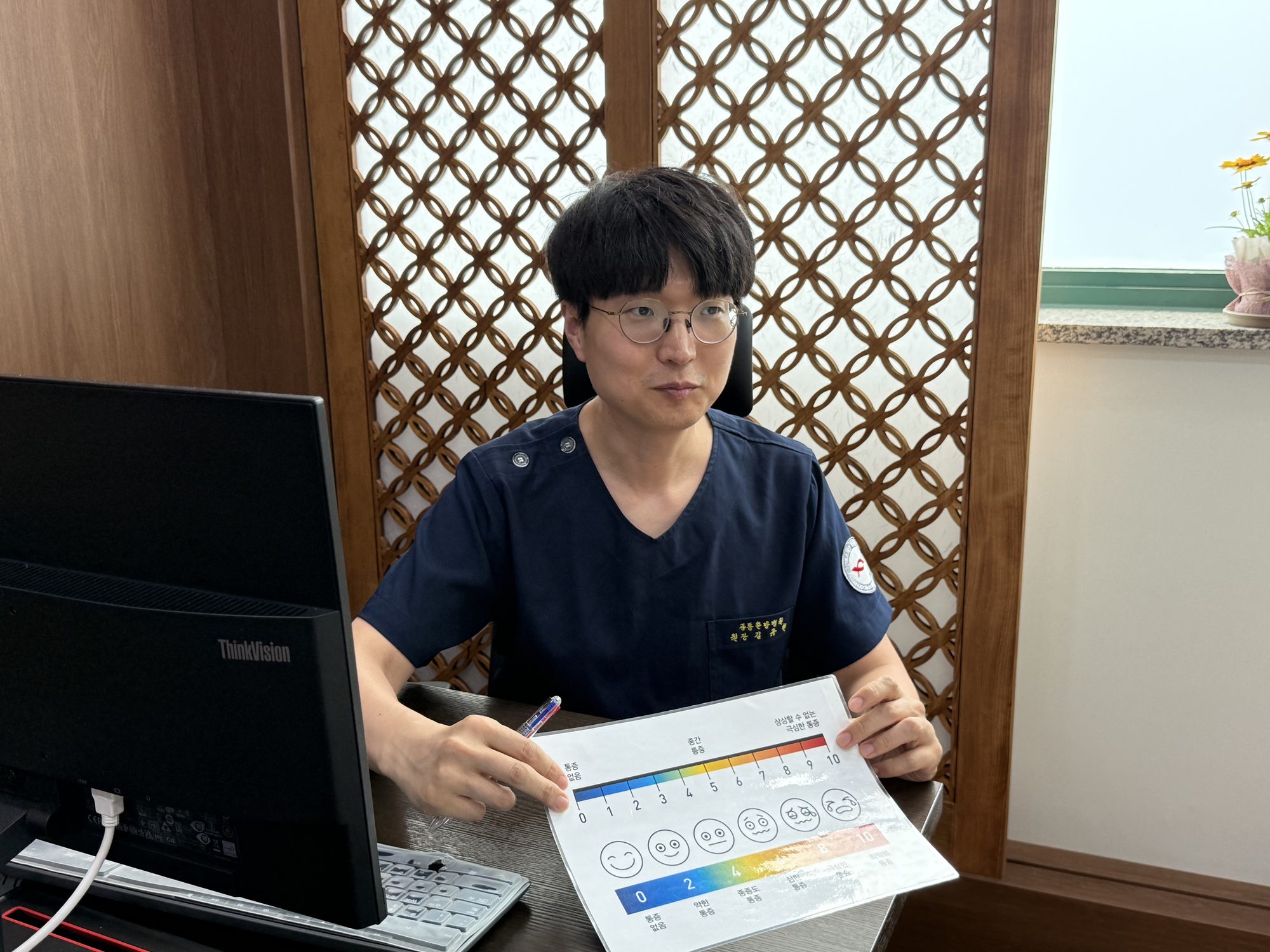
Can I take Korean herbal medicine with my regular prescriptions?
Sometimes, and only after someone has checked. The center's answer to this exact question is short: tell them what you are taking, and they check for interactions before composing your prescription.
That step deserves more attention than it gets online. The US National Center for Complementary and Integrative Health (NCCIH) points out that "natural" does not always mean "safe", that some supplements can harm people with certain conditions or those taking certain medications, and that St. John's wort, for example, makes many medications less effective.
So write the list before you fly. Include prescription drugs, over-the-counter medicines, vitamins and supplements, and anything a herbalist at home has given you, with doses. Photos of the boxes work too. If you take a blood thinner, put it at the top.
Risks, side effects and who should be careful
Acupuncture and herbal medicine both carry risks, and they are different risks.
For needles, NCCIH's acupuncture overview notes that complications have come from nonsterile needles and improper delivery, and that acupuncture delivered badly can cause infections, punctured organs and nerve injury. In the US, the FDA requires acupuncture needles to be sterile and labeled for single use. The NHS asks people who take blood-thinning medicine, have a higher risk of bleeding, or have a skin condition or skin infection to raise it before treatment.
For herbs, the questions are interactions, the conditions you already have, and timing. NCCIH warns that many supplements have not been tested in pregnant women, nursing mothers or children, and that some can increase the risk of bleeding or affect your response to anesthesia. If you are pregnant, breastfeeding, or have surgery booked soon after the trip, say so at the start of the consultation, not at the end.
Pharmacopuncture involves both a needle and an herbal preparation, so both sets of questions apply.
One caution has nothing to do with Korean medicine itself. NCCIH's advice is not to use acupuncture to put off seeing a health care provider about a health problem. Sudden weakness on one side of the body, new chest pain or a sudden severe headache needs emergency care first, wherever you are.
Responses to any of these treatments vary from person to person, and the in-person exam decides what is suitable for you.
Why would a Korean medicine doctor work with neurology?
Because some conditions need both at once. Western and Korean medicine have shared one foundation at Kwangdong Hospital since it opened in 1994, and the Korean Medicine Center works with Internal Medicine, Neurology and Rehabilitation Medicine on complex conditions.
"Western and Korean medicine are under one foundation, so the same patient is seen from two perspectives." This is how Dr. Byung-Ha Moon, Center Director, Korean Medicine, puts it on the hospital's center page.
Facial palsy is the clearest case. In the center's Facial Palsy Inpatient Care program, Western medical tests first rule out other causes, Neurology helps rule out severe forms such as Ramsay Hunt syndrome, and steroid treatment is given in collaboration with Neurology. Acupuncture, pharmacopuncture, manual therapy and herbal medicine run during the same stay. Visitors who expected to choose between "Western" and "Korean" treatment are often surprised to find both in one plan.
The hospital is also plain about its limits. It does not perform surgery. When surgery or highly complex treatment is needed, it refers patients to a major university hospital and takes over recovery and long-term care afterwards.
Some treatment is counted in days, not sessions
Facial Palsy Inpatient Care, the center's signature program, is a 3–5 day inpatient stay, mainly for patients within 2–3 days of onset, with acupuncture twice a day and pharmacopuncture once a day.
Forum posts describe Korean medicine as a series of short outpatient visits, and for many conditions it is. The hospital's reasoning for admission is that this frequency is hard to keep up as an outpatient.
Timing is the reason. The program page says treatment in the first 72 hours after onset matters for recovery, and the center describes the two-week acute phase as critical. For a traveler, this is the one situation where the usual advice to plan ahead does not apply. If one side of your face suddenly stops moving while you are in Seoul, get a medical assessment the same day.
After discharge, outpatient care continues for remaining asymmetry and weakness. If you live abroad, ask during the stay how that later phase would work from home, before you rely on it.
What does the evidence say about acupuncture?
Evidence depends on the condition. NCCIH summarises research showing acupuncture may be helpful for several pain conditions, including back or neck pain, knee osteoarthritis pain and postoperative pain, while evidence for sciatica and fibromyalgia is mixed or weak.
The NHS may offer acupuncture for long-term pain, migraine-type headaches or severe hiccups, and notes that complementary therapies are not tested in the same way as standard medicines.
The World Health Organization takes a similar line on traditional medicine as a whole: integration into health systems has to be done appropriately, effectively and safely, and efficacy and safety should be established through rigorous scientific validation, even for remedies with a long history.
A fair reading for a visitor: Korean medicine is a medical option whose evidence varies by condition, and it makes most sense when someone is also reading your test results. That is the arrangement the center describes, with treatment decided after the Korean medicine exam and the Western results are looked at together.
What to bring, and what to ask, before the first appointment
A short list covers most of what decides the visit:
- your medication and supplement list, with doses
- recent test results or imaging reports, and the date your symptoms began
- whether you are pregnant, breastfeeding, on a blood thinner or due for surgery
- how many days you will be in Seoul
In the consultation, three questions are worth asking: which of the four treatments is being suggested and why, how many sessions or days the plan assumes, and what you are expected to do once you are home.
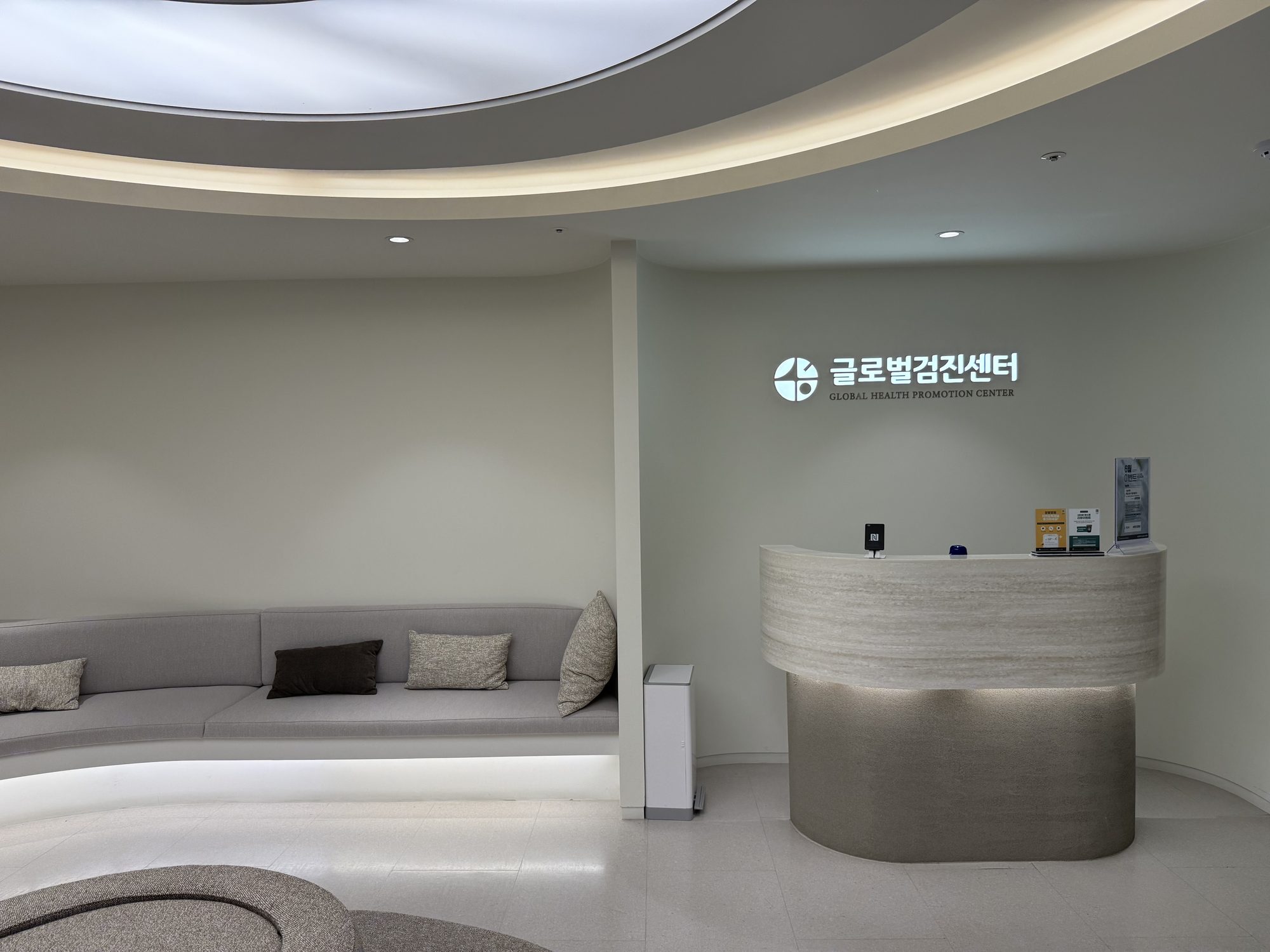
The center is on 6F of Kwangdong Hospital, 612 Bongeunsa-ro, Gangnam, 1 minute from Bongeunsa Station Exit 5 and near COEX. The hospital is open weekdays 09:00–17:30 and Saturdays 09:00–13:30, and closed on Sundays and public holidays. Coordinators who speak English are on site. The Korean Medicine Center page lists the clinics and doctors, and the reservation and directions page has the map. Other posts in this series are collected under Korean medicine.
If one question is holding you back, such as whether your symptom is something the center sees, or what to bring about the medicines you take, send that one question on WhatsApp. You don't need to have decided anything to ask, and a coordinator guides you from the reservation onward if you go ahead.
Frequently asked questions
Is Chuna the same as chiropractic?
Both use the hands on the joints and spine, but Chuna is a Korean medicine therapy. At Kwangdong Hospital it is decided within the Korean medicine exam and can be combined with acupuncture or herbal medicine. Whether it suits you depends on that exam.
Can I see a Korean medicine doctor and a Western doctor at Kwangdong Hospital on the same visit?
The hospital's departments share one building, and it states that you do not rebook and wait to reach the next department. Which departments you see, and when, is arranged with a coordinator.
Is Korean herbal medicine safe during pregnancy?
Many herbal products and supplements have not been tested in pregnant women, according to the US National Center for Complementary and Integrative Health. Tell the doctor at the start of the consultation if you are pregnant or breastfeeding, so it is part of the decision from the beginning.
How long is the facial palsy inpatient stay at Kwangdong Hospital?
Facial Palsy Inpatient Care usually takes 3–5 days on the 7th–8th floor wards. It is mainly for patients within 2–3 days of onset, and the length is adjusted to the person after consultation.
Which languages do the coordinators speak?
Kwangdong Hospital has coordinators in English, Japanese, Russian, Chinese and Mongolian on site.
Sources
- Acupuncture: What You Need To Know · National Center for Complementary and Integrative Health (NIH)
- Using Dietary Supplements Wisely · National Center for Complementary and Integrative Health (NIH)
- Acupuncture · NHS
- Traditional medicine (Questions and answers) · World Health Organization
Written with AI assistance from Kwangdong Hospital's published center and program information and the medical sources listed. Not yet reviewed by a physician.