Brain fog: what to check first, before you treat it
Brain fog describes how thinking feels. It does not explain why. Before choosing a supplement, a herbal formula or a program, rule out the warning signs and the common, treatable causes. Here is the order we follow at Kwangdong Hospital in Seoul.
You sit down to read a report and the third paragraph slides off. A colleague's name is on the tip of your tongue and stays there. By mid-afternoon your head feels full of cotton. People call this brain fog, and the name describes the experience well. It says nothing about the cause.
That matters, because the causes range from a short night's sleep to an underactive thyroid, low vitamin B12, iron deficiency, depression, a side effect of medication, or the after-effects of an infection such as COVID-19. Several of these are simple to test and treat. So the order of steps is the most useful thing to get right.
Step one: rule out what cannot wait
A small number of symptoms are emergencies. They can look like "fog" at first, which is why they belong at the top of any list. The NHS lists the signs of stroke: the face drooping on one side, weakness in one arm, and slurred or confused speech.
Get emergency care right away if any of these appear suddenly:
- confusion or a change in awareness
- weakness, numbness or drooping on one side of the face or body
- a first seizure
- a sudden, severe headache
In Korea, the emergency number is 119. If memory or daily function has been getting steadily worse over weeks or months, the next step is a neurologist.
Step two: look for the common causes
When none of the warning signs apply, the first visit is about the usual suspects. At Kwangdong Hospital the basic evaluation is a set of blood tests plus a heart rate variability (HRV) reading:
| Test | What it can point to |
|---|---|
| Complete blood count | Anaemia, infection |
| Metabolic panel | Blood sugar, kidney and liver problems |
| Thyroid function | An underactive or overactive thyroid |
| Vitamin B12 | Deficiency, which the NHS links to memory and concentration problems |
| Inflammation markers | Ongoing inflammation in the body |
| HRV | How the autonomic nervous system is balancing rest and stress |
The doctor also asks about sleep, mood, alcohol, recent infections and every medication and supplement you take. Iron deficiency, poor sleep and medication side effects are among the easiest causes to miss and the easiest to act on.
Step three: neurology when the findings point there
Some patterns call for a closer look. Dizziness or a racing heart when standing up can be checked with a tilt-table test. Clear memory decline or episodes of altered awareness may need an EEG or a brain MRI. At Kwangdong these go through the hospital's neurologist, in the same building, so results come back to one chart.
If a thyroid problem turns up, internal medicine takes it from there. The point of testing first is that a found cause gets its own treatment.
Where Korean medicine fits
Sometimes the tests come back without a clear explanation and the fog stays. That is the situation where Kwangdong's Korean medicine doctors set a concrete goal with you, such as reading for an hour or getting through an afternoon of work, and choose treatment from the examination:
- herbal medicine: a prescription chosen after the examination, based on your symptoms, constitution and current medication
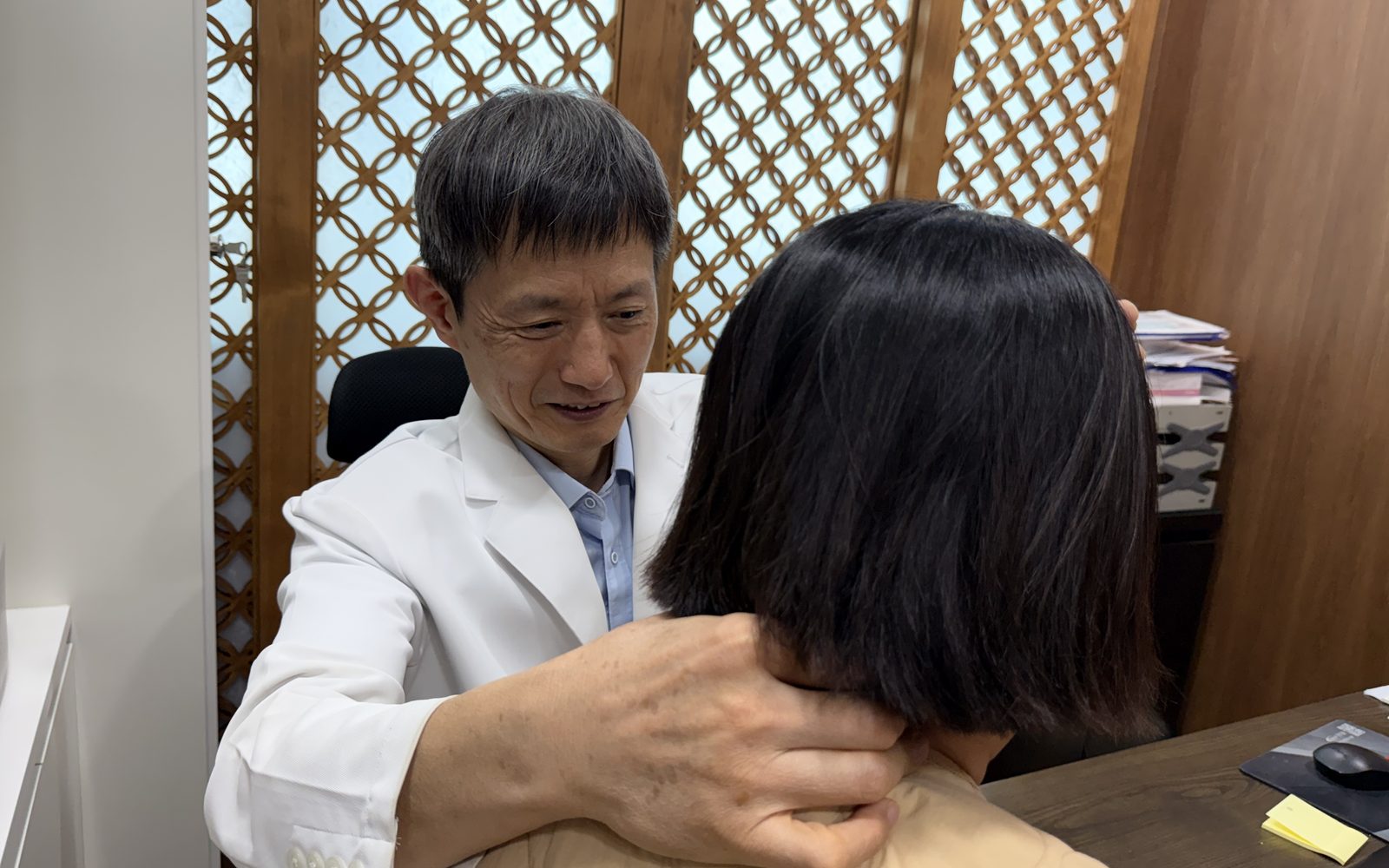
- craniosacral chuna, a gentle manual therapy of the head, neck and spine
- acupuncture and pharmacopuncture at points of the head and neck
A typical plan runs four weeks, with herbal medicine daily and a hands-on session once or twice a week, then a full re-evaluation. If little has changed, the next step is to look again for a cause before any extension.
What the evidence does and does not say
Research on herbal medicine for fatigue and brain fog is limited, and much of it comes from laboratory and animal studies. We do not claim that any herbal formula treats brain fog. Results differ from person to person.
For a full outline of the tests and the four-week plan, see brain fog care at Kwangdong Hospital.
Before you contact us
It helps to send three things: what changed and when it started, any recent test results, and a list of the medications and supplements you take. If you are visiting Seoul, add your travel dates so the team can suggest what fits the trip.
Frequently asked questions
Is brain fog a medical diagnosis?
No. It describes symptoms such as poor focus, word-finding trouble and mental fatigue. A diagnosis comes from finding the cause, which is why testing comes first.
Which tests are done first for brain fog?
At Kwangdong Hospital the basic evaluation is a complete blood count, metabolic panel, thyroid function, vitamin B12, inflammation markers and heart rate variability. Neurology tests such as a tilt-table test, EEG or brain MRI are added only when findings point there.
Can Korean medicine treat brain fog?
Korean medicine is considered when tests do not fully explain the symptoms. Research on the formulas used is mostly laboratory and animal work, so treatment is chosen after examination and reviewed at four weeks.
Sources
- Stroke: symptoms · NHS
- Vitamin B12 or folate deficiency anaemia · NHS
- Underactive thyroid (hypothyroidism) · NHS
- Long-term effects of COVID-19 (long COVID) · NHS
- Brain fog · Cleveland Clinic
Written with AI assistance from Kwangdong Hospital's internal program outline and the medical sources listed. Not yet reviewed by a physician.