Physical therapy in Seoul for expats: why it starts with a doctor, what to bring, and how sessions run
In Korea, physical therapy at a hospital starts with a doctor's exam, usually a rehabilitation medicine specialist, and therapists then carry out the plan. Here is why, what to bring to the first visit, how sessions run and how it differs from manual therapy or massage alone.
You have a shoulder that has not lifted properly since spring, or a knee that aches after every run along the Han River. At home you might book a physiotherapist directly. Then you look for physical therapy in Seoul and find that the route runs through a doctor's office first.
That surprises a lot of expats, and it changes how you plan. This post explains why the doctor comes first in Korea, who does what once you are in the system, what to bring to the first visit, and how sessions usually run.
Why does physical therapy in Seoul start with a doctor?
Because of how Korean law defines the job. The Medical Service Technologists Act describes physical therapists, along with radiographers and clinical lab staff, as people who work under the guidance of a doctor or dentist, as the Seoul Economic Daily reported in May 2026. That guidance is usually interpreted as happening inside a medical institution. A bill to let therapists also work from a doctor's prescription or referral, including outside hospitals, was under debate at the time.
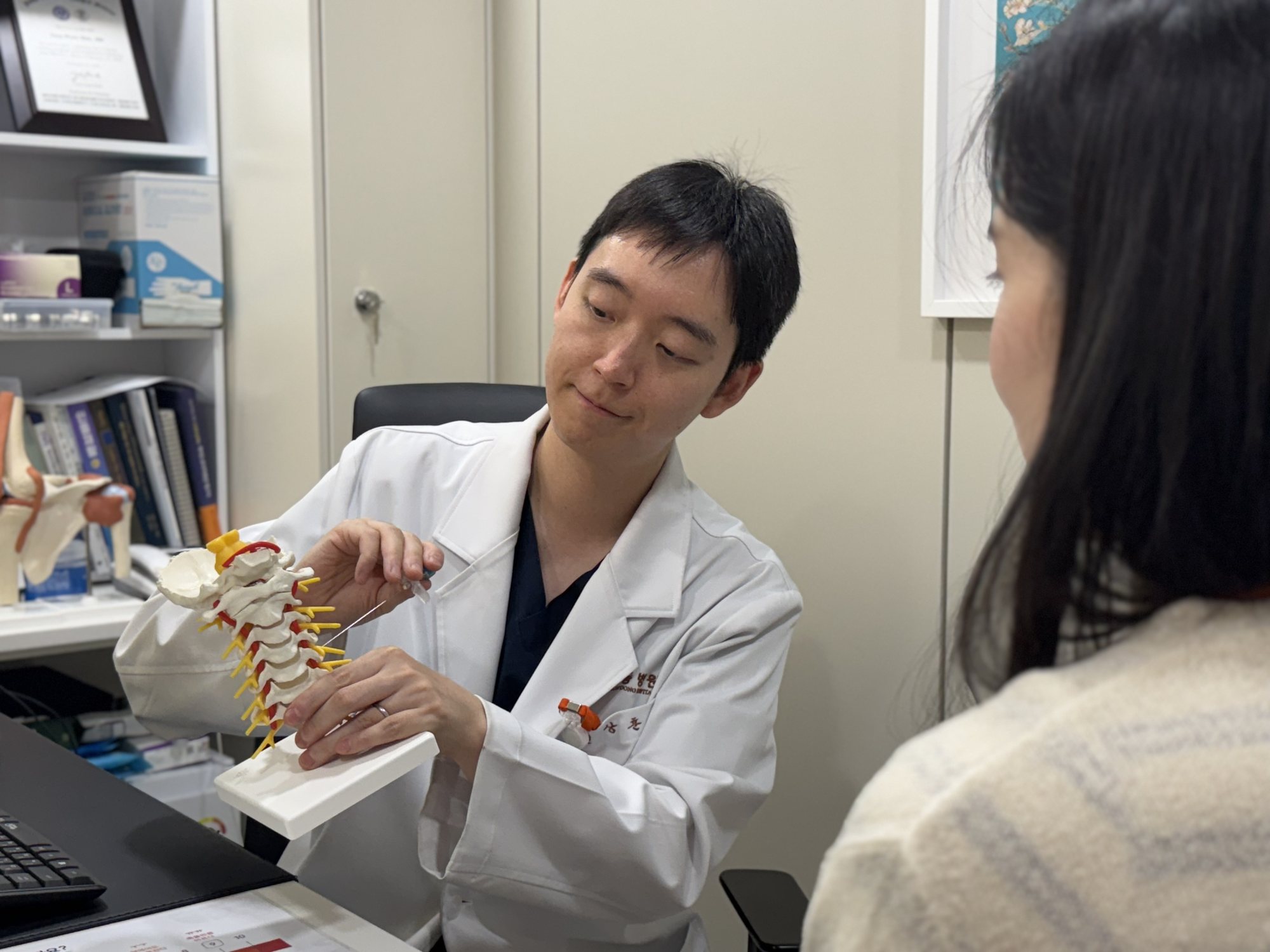
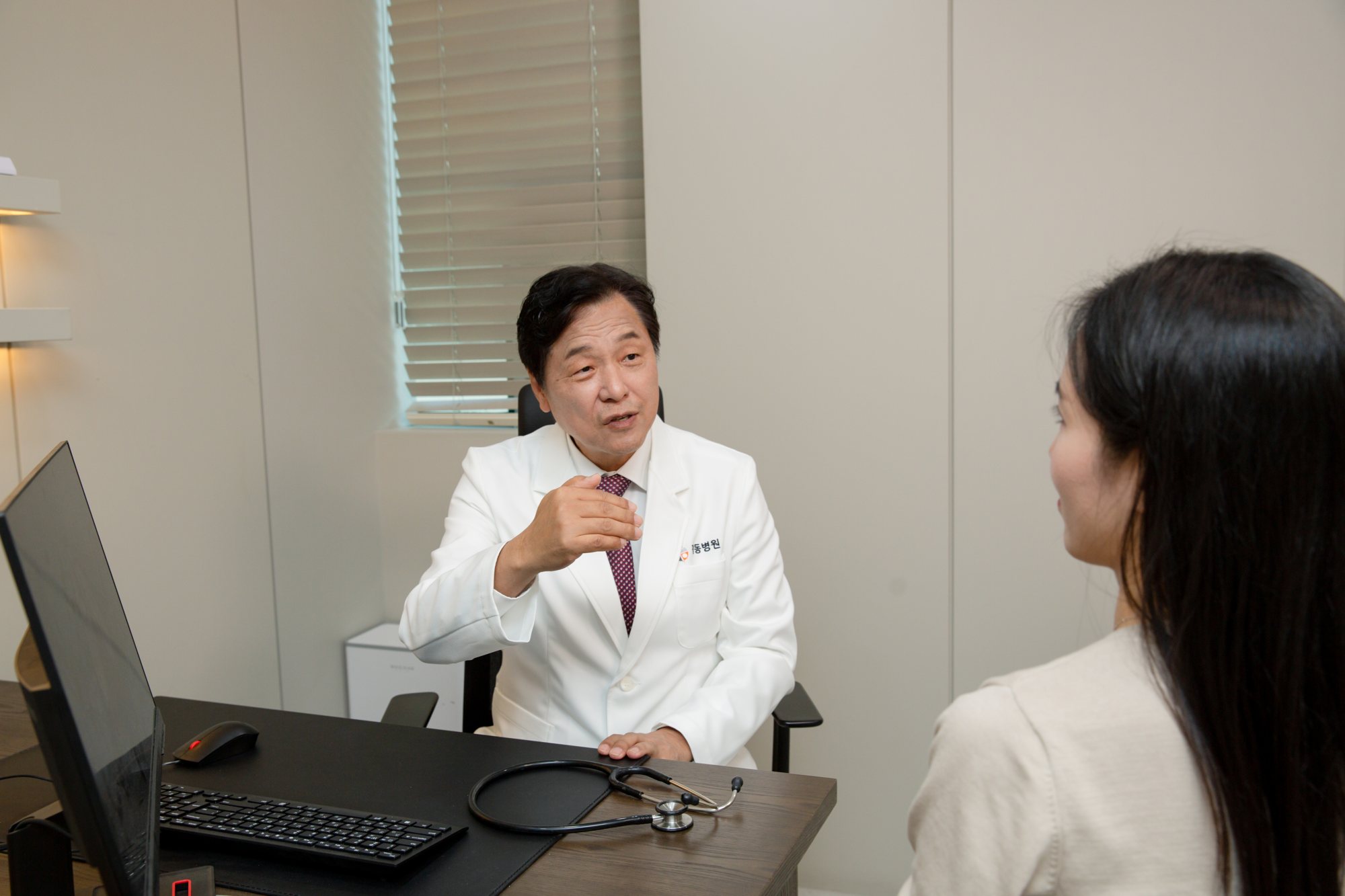
In practice, at a hospital or clinic you first see a doctor, most often a rehabilitation medicine specialist (a physiatrist). The doctor examines you, orders imaging if needed and writes the plan. Therapists then carry it out.
Compare that with the UK, where the NHS notes that in many areas you can refer yourself to community musculoskeletal services without seeing a GP. If you are used to that, budget an extra step and an extra appointment in Seoul.
Who is who: physiatrist, physical therapist, manual therapy, massage
The words overlap across countries, so it helps to know the roles before you walk in.
| Who | Role | Ask |
|---|---|---|
| Rehab doctor | Diagnosis, plan | What is the cause? |
| Physical therapist | Exercise, devices | How many sessions? |
| Manual therapy | Hands-on work | Part of a plan? |
| Massage, spa | Relaxation only | Not a diagnosis |
The World Health Organization lists both physiotherapists and physical medicine and rehabilitation doctors in the rehabilitation workforce, with care tailored to each person's goals. If you see someone advertising chiropractic or posture correction outside a hospital, titles and training differ from country to country, so ask what licence the person holds in Korea and whether a doctor has examined you.
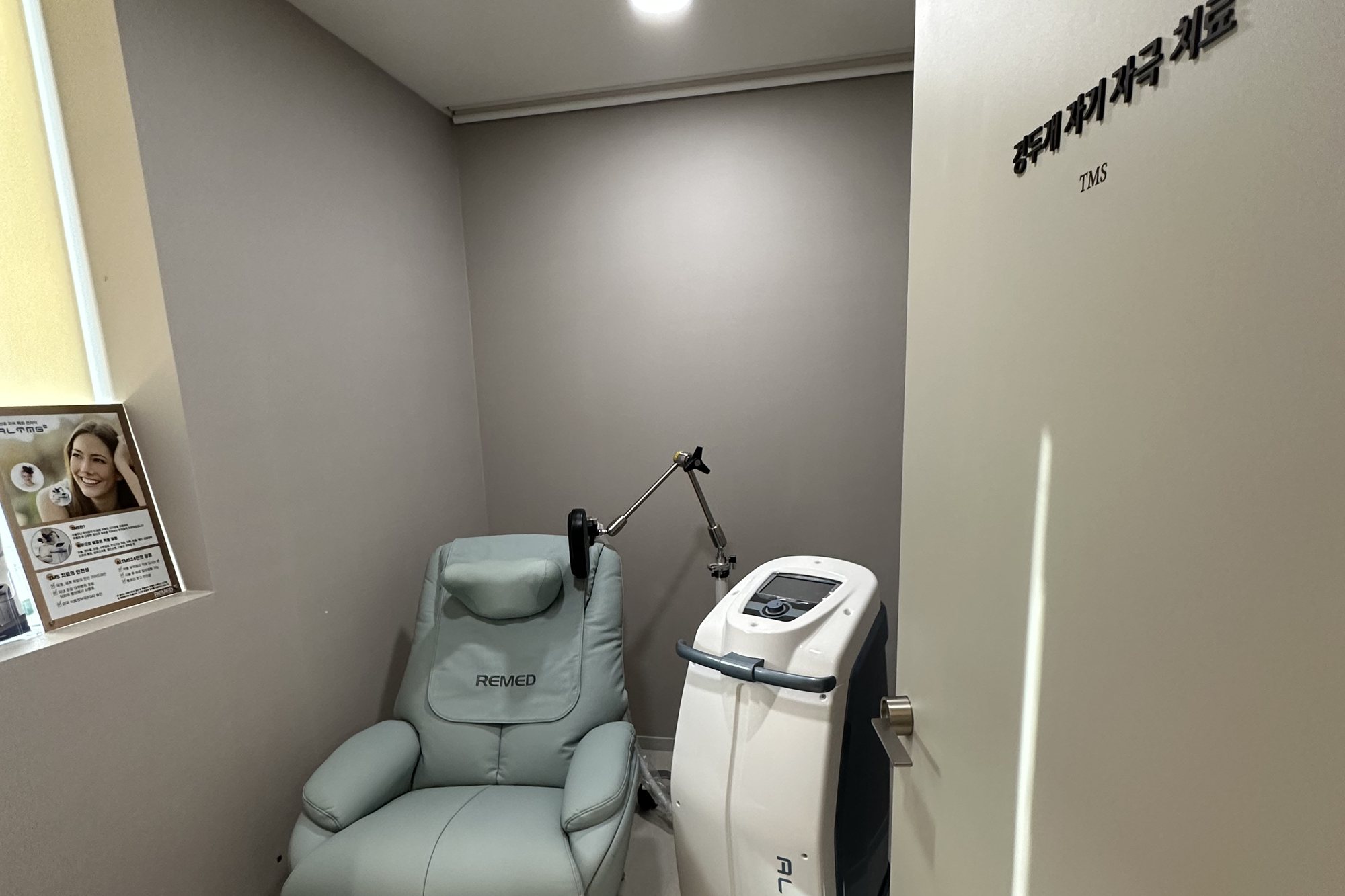
What should you bring to the first visit?
Paper and pictures save a repeat scan and a lot of explaining.
- Imaging. MRI or X-ray reports, and the images on a disc or download link if you have them.
- Surgeon's notes, if this is rehab after an operation, including any restrictions on movement or weight-bearing.
- Your home physio's notes, if you had therapy before: what was tried and what helped.
- A medicine list, including painkillers and anything taken for sleep.
- What you want back. Running 10 km, carrying a toddler, sitting through a workday. A specific goal shapes the plan.
- Clothes you can move in. Shorts for a knee, a loose shirt for a shoulder.
If your documents are not in English or Korean, a short translated summary helps.
How a first visit and sessions run at Kwangdong Hospital
Kwangdong's Orthopedic Pain & Rehabilitation Center sits on 3F and 5F and is led by Center Director Dr. Sang-Hoon Shin, a rehabilitation medicine specialist and former clinical instructor in Rehabilitation Medicine at Gangnam Severance Hospital. The center describes the route in five steps.
- Assessment. Movement, strength and posture are measured together.
- Imaging. When needed, MRI confirms the structural cause.
- Explaining the cause. Pictures show why it hurts, not just where.
- Non-surgical treatment. Injections, manual therapy and regenerative treatment are combined.
- Rehabilitation and return. One-on-one exercise rehabilitation back to daily life and sport.
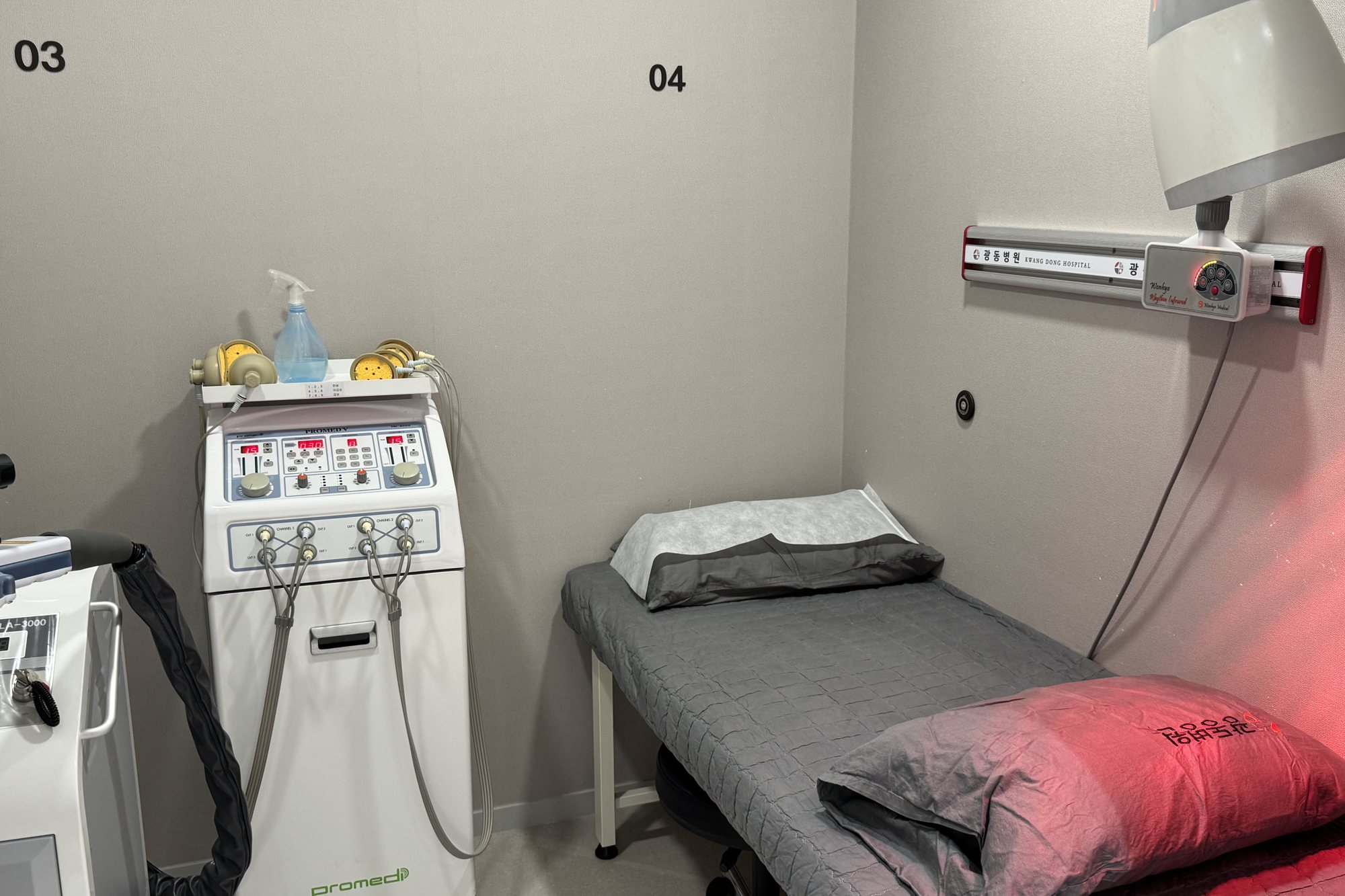
The hospital states that, following a rehabilitation physician's diagnosis, exercise specialists and physical therapists work with patients one-on-one. The 5F floor holds the manual therapy rooms, physiotherapy and an exercise therapy room. The rehabilitation department lists manual therapy, posture correction, functional recovery exercise, sports rehabilitation, intramuscular stimulation, radiofrequency pain treatment, combined electrical stimulation and shockwave therapy among its non-surgical options.
As the NHS describes for physiotherapy generally, expect to be given exercises to do at home between sessions. Those exercises do much of the work.
Can you just book manual therapy or a massage-style session?
This is the most common question on expat forums. Kwangdong's center FAQ answers it directly: yes, manual therapy alone is possible, but if it is repeated without an assessment, the cause remains, so an assessment first is recommended.
The evidence leans the same way. For low back pain, the UK's NICE guideline advises considering manual therapy (manipulation, mobilisation or massage) only as part of a treatment package that includes exercise. Hands-on work can ease pain for a while. Exercise is what changes how the joint or back copes next week.
Physical therapy in Korea around work or a stay
Kwangdong is open weekdays 09:00 to 17:30 and Saturdays 09:00 to 13:30, and closed on Sundays and public holidays. If you work office hours, Saturday mornings and early weekday slots are worth asking about when you book.
How many sessions you need is decided after the assessment. For pain that has lasted years, the center runs Chronic Pain Recovery, a 12-session course made up of diagnosis, five regenerative treatment sessions and five exercise therapy sessions with progress checks. Our post on non-surgical options for chronic back pain goes through it in detail.
If you are here after knee surgery, our post on ACL rehab in Seoul covers the stages. Kwangdong does not perform surgery. If surgery is judged necessary, it refers you to a major university hospital, and rehabilitation after surgery can come back to the same center, working with the 5F Sports Medicine Center on return to sport.
When physical therapy is not the first step
Some symptoms need a doctor today, not a therapy booking. The NHS lists pain, tingling, weakness or numbness in both legs, loss of feeling around the genitals or anus, new problems controlling your bladder or bowels, and back pain that started after a serious accident as reasons for immediate help. Fever or feeling generally unwell with back pain, or severe pain that is getting worse quickly, also needs urgent attention. In Korea, call 119 for an ambulance.
What does physical therapy in Seoul cost?
It depends on what the assessment finds and which treatments are combined: imaging, injections, manual therapy and the number of exercise sessions all change it. Kwangdong explains this at the first visit rather than quoting in advance. If you have expat or travel health insurance, ask your insurer before you start what they need, often a doctor's diagnosis and itemised receipts.
Kwangdong Hospital is at 612 Bongeunsa-ro, Gangnam, one minute from Bongeunsa Station, Exit 5, near COEX. Coordinators speak English, Japanese, Russian, Chinese and Mongolian. More is on the Orthopedic Pain & Rehabilitation Center page and the visit page. If you already have an MRI or a home physio report, send a photo of it along with where it hurts and what you want to get back to.
Frequently asked questions
Can I see a physical therapist in Korea without a doctor?
In a hospital or clinic, physical therapy normally starts with a doctor's exam, because Korean law defines physical therapists as working under a doctor's guidance. A bill to widen this was under debate in 2026. At Kwangdong Hospital, therapists work after a rehabilitation physician's diagnosis.
How do I find an English-speaking physical therapist in Seoul?
Ask the hospital before booking whether interpreting or English-speaking coordinators are available for both the doctor visit and the sessions. Kwangdong Hospital has coordinators who speak English, Japanese, Russian, Chinese and Mongolian. Bring your reports so less needs to be explained from scratch.
What do Reddit threads mean by dosu chiryo?
Dosu chiryo is the Korean term for manual therapy, hands-on treatment by a therapist. At Kwangdong it is available, but the center recommends an assessment first, since repeating it without one leaves the cause in place. Guidelines such as NICE advise pairing manual therapy with exercise.
How many physical therapy sessions will I need?
It is decided after the assessment, depending on the cause and your goal. For long-standing pain, Kwangdong's Chronic Pain Recovery course runs 12 sessions, with composition adjusted to the person. Home exercises between sessions matter as much as the visits.
Is physical therapy in Korea different from a massage shop?
Yes. Medical physical therapy follows a doctor's diagnosis and a plan built around exercise, with devices or manual therapy added as needed. A massage shop can be pleasant for comfort but does not diagnose the cause of pain.
Sources
- Korean Doctors, Dentists Rally Against Medical Technicians Act Revision (May 2026) · Seoul Economic Daily
- Physiotherapy · NHS
- Rehabilitation (fact sheet) · World Health Organization
- Low back pain and sciatica in over 16s: assessment and management (NG59), Recommendations · National Institute for Health and Care Excellence (NICE)
- Back pain · NHS
Written with AI assistance from Kwangdong Hospital's published center and program information and the sources listed. Not yet reviewed by a physician.