Brain MRI in Korea: when it makes sense, and when a consultation should come first
A brain MRI in Korea is worth doing when there is a specific question. For a typical headache or no symptoms at all, a consultation often comes first. How Kwangdong Hospital decides whether to scan, and the red flags that should not wait for a trip.
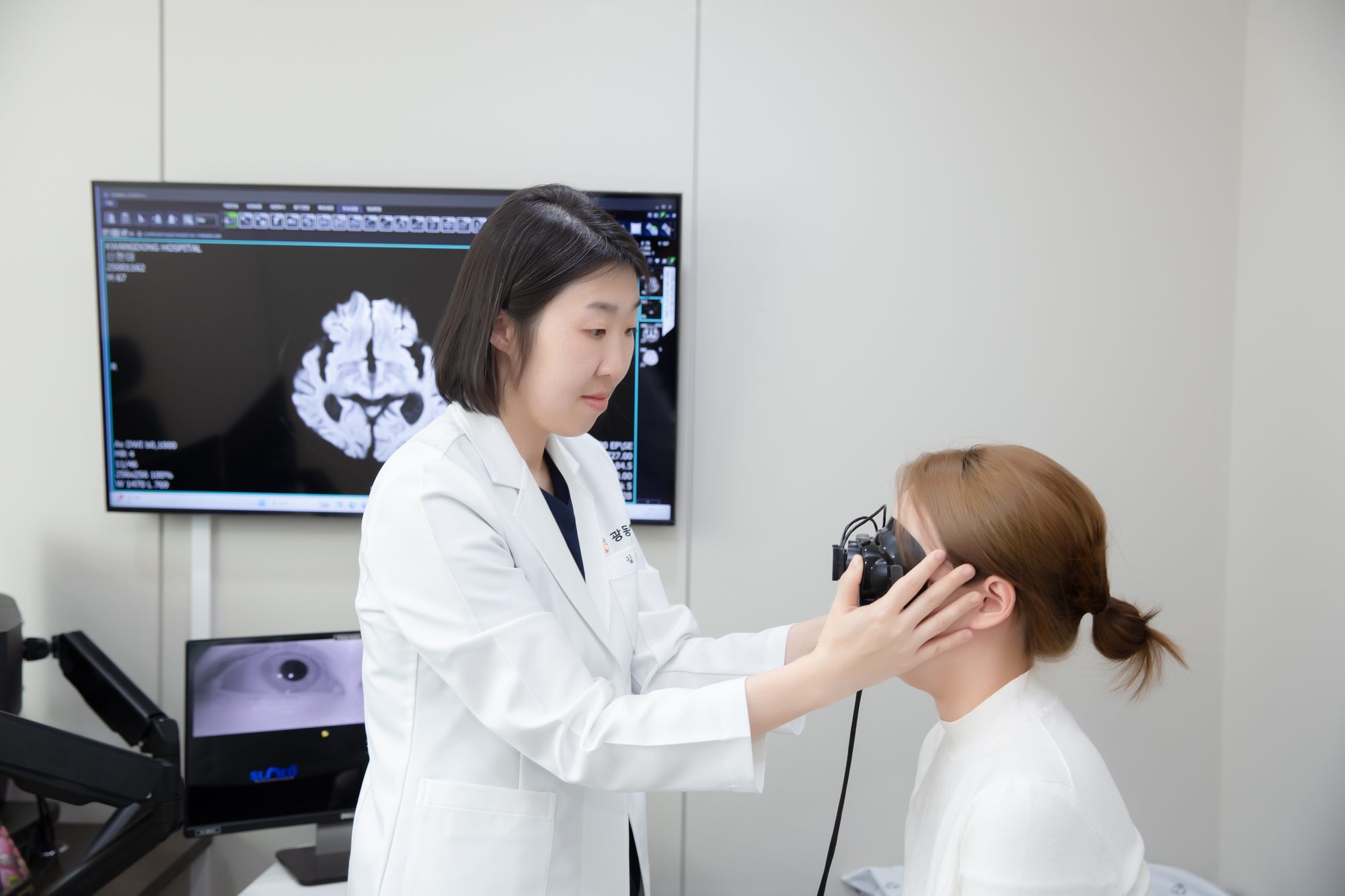
Not every headache, lapse of memory or family worry calls for a scan, and a brain MRI in Korea is easy to book for exactly that reason: many checkup packages offer one, and some visitors add it "just to be sure." Sometimes that is the right call. Sometimes a consultation would answer the question better, and the scan would only add a finding nobody needed. At Kwangdong Hospital in Gangnam, brain MRI and MRA are listed in the Brain Health Checkup as tests done "when needed," and whether you need them, and how far the checkup should go, is decided individually in consultation.
Below are the situations where a brain MRI is worth doing, the ones where it is not the first step, and the ones where you should not wait for a trip at all.
First: when not to wait for a scan in Seoul
Some symptoms are emergencies, not checkup questions. The NHS advises calling emergency services or going to A&E if a headache comes with any of the following:
- a seizure
- numbness or weakness in the body or face
- a sudden, extremely painful onset
- a head injury in the last three months
- difficulty speaking, balancing, walking or remembering
- drowsiness or confusion
- loss of vision
- a very high temperature with a stiff neck, or a rash that does not fade under a glass
If any of these apply, go to the nearest emergency department where you are. In Korea the emergency number is 119.
When a brain MRI in Korea does make sense
A brain MRI answers questions about structure: bleeding, tumors, stroke, multiple sclerosis, swelling, and loss of brain tissue. MedlinePlus, from the U.S. National Library of Medicine, lists it as a way to find the cause of muscle weakness or numbness, changes in thinking or behavior, hearing loss, vision problems, speaking difficulties, dementia, and headaches when certain other symptoms or signs are present. A related scan, MRA, looks at the blood vessels of the brain.
In plain terms, a brain MRI is most useful when there is a specific question:
- a change in memory, thinking or behavior that a doctor wants to explain
- a new neurological sign, such as weakness, numbness or a change in speech or vision
- a headache with features that worry a doctor, not just a headache
- following up something seen on an earlier scan
MedlinePlus also notes that MRI uses no radiation. That makes it safer than CT in that respect, but not a test without consequences, as the next section shows.
When it is probably not the first step
A typical headache you already know. The UK's NICE headache guideline is direct: people diagnosed with tension-type headache, migraine, cluster headache or medication overuse headache should not be referred for neuroimaging solely for reassurance. A clear diagnosis and a plan usually help more than a scan.
No symptoms, and no particular question. A scan of a healthy brain does not come back empty as often as people expect. A systematic review in the BMJ that pooled studies of people without symptoms found incidental brain findings were common, and that about one in 37 people scanned had one. Neoplastic incidental findings (growths) were found in about 0.7% of people, more often with age, and detection was more likely with high resolution sequences. The authors concluded that these findings were not sufficient to justify screening healthy asymptomatic people. Many turn out to be harmless, but each one can mean more tests, follow-up scans and worry.
Memory worries without an assessment. A scan shows structure. It does not measure memory. A cognitive assessment and a history from you and your family usually come first, and the scan is added if it will help explain what they show.
How Kwangdong decides whether to scan
Kwangdong's Brain Health Checkup is led by neurologist Dr. Yeon-Jeong Kim, Director of Neurology, and is organised around three questions rather than a fixed list of tests: how your memory and cognition are now, what in your lifestyle and health should be looked at, and what care you will need next.
The published assessment has three parts:
| Part | What it covers |
|---|---|
| Cognition | Specialist consultation and history, cognitive screening or detailed assessment, daily functioning and family observations |
| Lifestyle and general health | Sleep and mood, history of hypertension, diabetes and dyslipidemia, blood tests as needed |
| Imaging, when needed | Brain MRI, cerebrovascular MRA, image reading and explanation by the doctor |
Optional tests such as ApoE genetic testing, EEG, amyloid-related blood tests and AI brain image analysis are considered only when needed, with availability and eligibility confirmed by the doctor. The program's FAQ answers the "do I need everything?" question in one line: MRI, MRA, genetic and amyloid-related tests are not a standard package offered to everyone.
On the Brain Health & Dementia Center side, MRI and MRA are performed at the B1 imaging center and read by a radiology specialist, and CT is performed only when needed, at the doctor's judgment. The center states that treatment is not decided from checkup results alone; when needed, a neurology visit and further assessment set the direction of care.
The hospital is also clear about limits. A checkup alone cannot detect every brain disease or predict whether dementia will develop.
Brain MRI cost in Korea: why the scope comes first
People searching for brain MRI cost in Korea often want one figure. There is none here, and on Kwangdong's brain checkup page the format is described as "composed individually after consultation," with scope and fees explained at consultation. The cost follows the scope: consultation and cognitive assessment only, or with MRI, MRA, or optional tests. Deciding the scope first is also how you avoid paying for a scan that was not going to change anything.
If brain imaging is part of a broader checkup instead, the Premium Checkup offers it inside optional modules, for example a cerebrovascular and brain tumor module (brain MRA and MRI, transcranial Doppler, carotid ultrasound and more) and a dementia and neurodegeneration module (brain MRI, cognitive tests and related tests). Those, too, are chosen by concern at the pre-checkup consultation.
MRI in Seoul: practical points before you book
- Metal and implants. MedlinePlus notes that the strong magnetic field can affect pacemakers and other implants and can move metal inside the body. Kwangdong explains pre-scan checks, such as metal in the body, implanted devices and surgical history, when you book.
- Contrast and kidneys. If you have kidney problems, say so before the test; MedlinePlus notes that gadolinium contrast can be harmful to people with kidney disease on dialysis.
- Timing and language. How long tests take, how many visits, and whether to fast are explained when you book. Coordinators in English, Japanese, Russian, Chinese and Mongolian are on site at the hospital.
- What to bring. Previous scan reports and images, a list of medicines and supplements, and notes on what has changed and since when.
If you already have a diagnosis of mild cognitive impairment or dementia, the hospital may recommend a neurology visit before a checkup, rather than repeating tests.
The honest answer
If you have a specific symptom or a question a doctor wants answered, a brain MRI can settle it, and Kwangdong does them in the same building as the neurology consultation. If you have no symptoms and simply want to be sure, start with a consultation; it may tell you that you do not need the scan at all. For a parent's memory test report, the post on what a MoCA score means reads the numbers line by line.
Frequently asked questions
Can I just book a brain MRI in Seoul?
At Kwangdong Hospital, brain MRI is part of the Brain Health Checkup only when needed, and whether to scan and how far to go is decided individually at consultation. You start by requesting a consultation, and a coordinator reviews previous tests and history.
How much does a brain MRI cost in Korea?
It depends on the scope: consultation and cognitive assessment only, or with MRI, MRA or optional tests. At Kwangdong Hospital the scope and fees are explained at consultation.
Should I get a brain MRI for headaches?
Not usually for a typical diagnosed headache such as migraine or tension-type headache; UK NICE guidance advises against imaging solely for reassurance. A headache with seizure, weakness, sudden severe onset, confusion or vision loss needs emergency care.
Is a brain MRI a good screening test if I have no symptoms?
A large review found incidental findings in about one in 37 people without symptoms, and concluded this did not justify screening healthy people. Kwangdong Hospital decides at consultation whether tests are needed at all.
Who reads the brain MRI at Kwangdong Hospital?
Brain MRI and MRA are done at the B1 imaging center and read by a radiology specialist, and the results are interpreted by the neurology-led team alongside your history and symptoms.
Sources
- Head MRI · MedlinePlus (U.S. National Library of Medicine)
- Headaches in over 12s: diagnosis and management (CG150) · National Institute for Health and Care Excellence (NICE)
- Incidental findings on brain magnetic resonance imaging: systematic review and meta-analysis (BMJ, 2009) · BMJ / PubMed Central
- Headaches · NHS
Written with AI assistance from Kwangdong Hospital's published center and program information and the medical sources listed. Not yet reviewed by a physician.